Planning a quick flight to your next sailing regatta or coastal getaway and wondering if you can bring your vape? TSA rules are clear: all electronic smoking devices must travel in your carry-on baggage only. Checked bags are strictly off-limits for vapes, e-cigarettes, and any battery-powered nicotine delivery device. This isn’t a suggestion, it’s federal policy.
Before you head to the airport, you’ll need to understand a handful of non-negotiable requirements. Your device’s lithium-ion battery can’t exceed 100 watt-hours, and you must take steps to prevent accidental activation during the flight. That means securing the power button, removing tanks if possible, and keeping everything accessible for TSA inspection. E-liquid follows the standard 3-1-1 rule: containers of 3.4 ounces or less, all fitting in a single quart-sized bag.
Here’s what catches sailors off guard: you cannot use or charge your vape on the plane, period. TSA officers also have final say on what passes through security, so packing smartly matters. Whether you’re flying into Newport for race week or jetting to the Caribbean for a charter, a few minutes of prep ensures you clear security without delays and arrive ready to enjoy both your sailing and your downtime.
The Core TSA Rule: Carry-On Only for All Vaping Devices
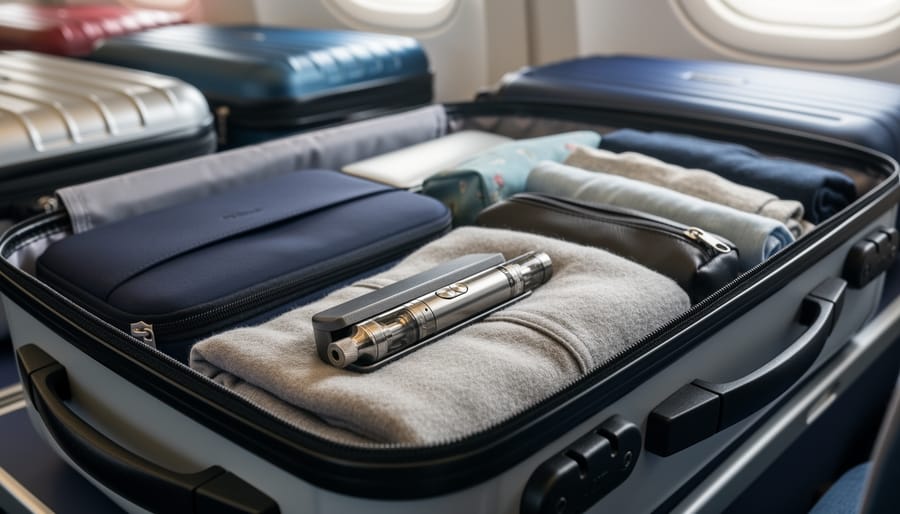
The TSA’s primary rule for vaping devices is straightforward: all battery-powered electronic smoking devices must travel in your carry-on bag. This blanket requirement applies to every type of device, e-cigarettes, vapes, e-cigars, e-pipes, e-hookahs, personal vaporizers, and any electronic nicotine delivery system you might bring along for your sailing trip. The TSA’s carry-on only for vapes policy leaves no room for interpretation.
Checked bags are strictly prohibited for these devices. You cannot pack your vape in your luggage destined for the cargo hold, period. If security screening detects a vaping device in checked baggage, you’ll face delays while TSA officers locate and inspect your bag, and you may be required to remove the device before your luggage can be loaded.
The reason behind this rule comes down to lithium battery safety. Vaping devices contain lithium-ion batteries, which pose a fire risk if they malfunction, get damaged, or activate accidentally. In the passenger cabin, crew can respond immediately if a battery issue occurs. In the cargo hold, a battery fire could go undetected until it becomes a serious hazard, a risk airlines and regulators simply won’t accept.
For sailors accustomed to bringing various electronic gear to regattas or cruising destinations, this means treating your vape like your phone or tablet: it stays with you in the cabin. Keep it accessible in your carry-on or personal item, ready for security screening, and you’ll clear this hurdle without complications.
Battery Restrictions and Safety Requirements
Preventing Accidental Activation
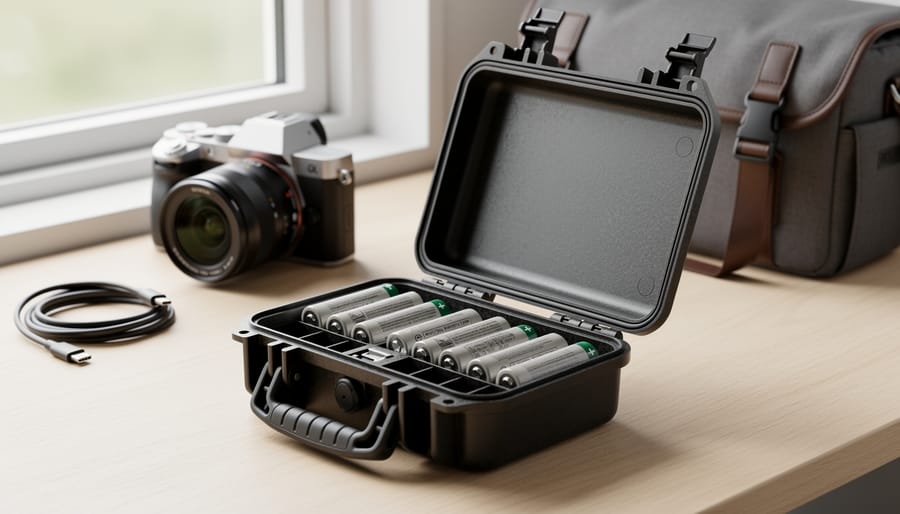
TSA regulations explicitly require passengers to prevent accidental activation of the heating element during transport. An inadvertent firing in your bag poses a fire risk, so taking concrete steps to disable your device isn’t just good practice, it’s mandatory.
The simplest approach is removing the battery entirely if your device allows it. This eliminates any chance of activation. For integrated battery models, power the device completely off using its safety lock or five-click shutdown feature. Many modern vapes include a dedicated travel mode or lock button specifically for this purpose.
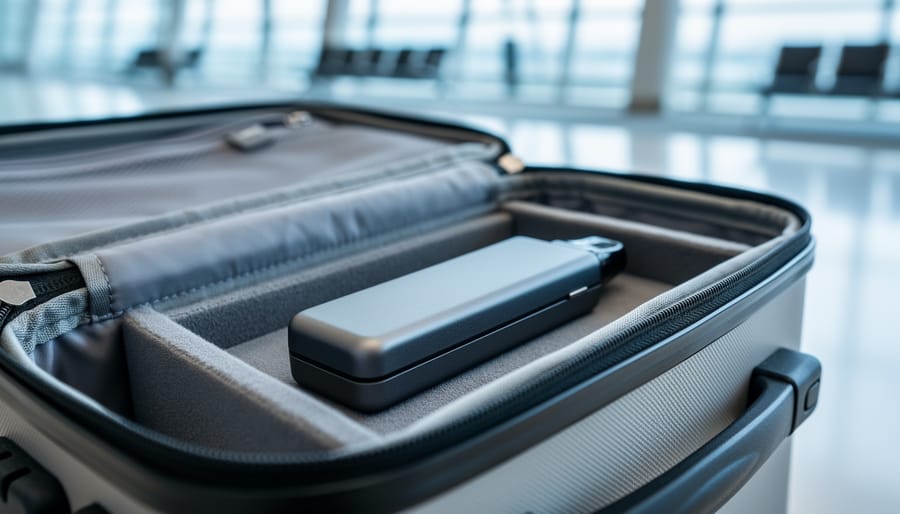
Physical protection matters too. Store your device in a hard-shell case or protective sleeve that prevents the fire button from being pressed by other items shifting in your carry-on. A padded sunglasses case or small Pelican-style box works well for sailors who already pack durable gear for marine environments.
If you’re carrying spare tanks or pods, empty them before flight or ensure they’re sealed in leak-proof bags. Changes in cabin pressure can cause e-liquid to seep out, which creates mess and increases the risk of accidental contact with the firing mechanism.
Before you leave for the airport, test your device’s lock function. Press the fire button to confirm it won’t activate. This thirty-second check prevents problems at security and ensures your vape stays dormant throughout the flight to your sailing destination.
E-Liquid and Refills: The 3-1-1 Rule
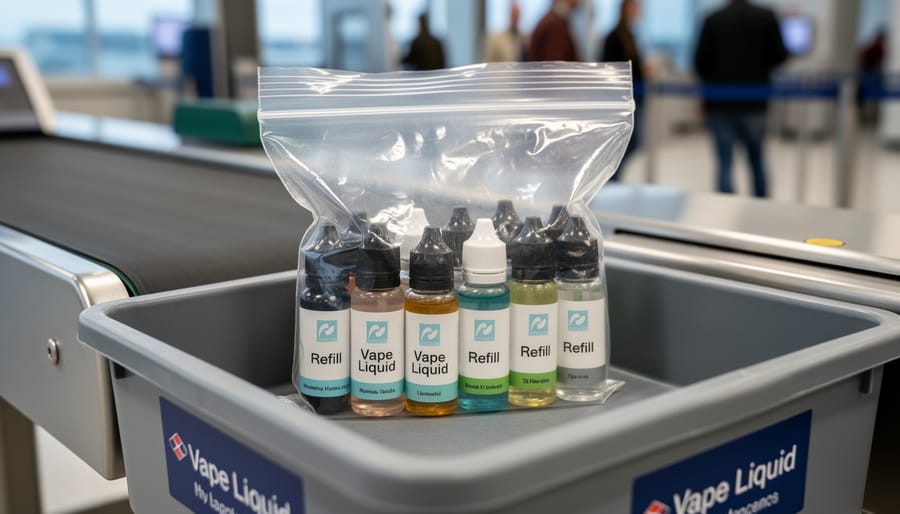
Your e-liquid and vape refills are subject to TSA’s standard 3-1-1 liquids rule, the same restriction that applies to shampoo, sunscreen, and any other liquid you carry through security. Each container of vape juice must hold 3.4 ounces (100 milliliters) or less, and all your liquid containers combined must fit inside a single quart-sized clear plastic bag. One bag per passenger, no exceptions.
This restriction catches many sailors off guard when planning extended trips to distant marinas or week-long Caribbean sailing adventures. That 120ml bottle you bought for a great price won’t make it through security unless you transfer it to smaller containers first. Most vapers find they can fit three to five small bottles in the quart bag alongside their toiletries, but space fills up fast.
If you’re heading out for a multi-day regatta or an extended cruise and need more liquid than the 3-1-1 rule allows in your carry-on, you have two practical options. First, pack additional e-liquid in your checked baggage. The devices themselves cannot go in checked bags due to battery restrictions, but the liquid refills can travel there without issue. Second, research vape shops near your destination marina or port and plan to purchase supplies after you arrive.
Sailors flying to popular destinations like Florida, the British Virgin Islands, or other coastal areas will typically find vape retailers near marinas and tourist zones. Check ahead to confirm availability and local regulations. For remote or international sailing locations, packing checked supplies becomes your best strategy. Just ensure those checked bottles are sealed tight and protected against leaks, a lesson anyone who has opened a suitcase full of shampoo-soaked clothes knows well.
Onboard Aircraft Restrictions
Once your device is safely stowed in your carry-on and you’re settled in for the flight to that Caribbean regatta or coastal sailing destination, you need to know the ironclad rule: you cannot use or recharge your vaping device at any point while the aircraft is in motion or on the ground between departure and arrival.
This isn’t a suggestion from the airline, it’s a federal restriction that applies to all passengers. The reason is straightforward: lithium batteries pose a fire risk in the confined, pressurized cabin environment, and vaping creates vapor that can trigger smoke detectors or alarm other passengers. Flight attendants are trained to enforce this rule strictly, and violations can result in serious consequences, including fines or even being met by law enforcement upon landing.
For sailors accustomed to long-haul flights to distant sailing venues, say, a ten-hour journey to the Mediterranean or a multi-leg trip to the South Pacific, this means planning accordingly. You won’t have access to your vape from the moment you board until you’re inside the terminal at your destination. If you rely on vaping for nicotine or relaxation, consider nicotine gum, patches, or simply waiting it out. Think of it as part of the travel routine, like stowing your phone during takeoff. Once you’re through customs and collecting your gear, you can use your device in designated airport areas before heading to the marina.
TSA Officer Discretion and Checkpoint Tips
Even when you’ve packed your vape correctly in your carry-on and followed every TSA rule, remember that the officer at the checkpoint makes the final call on whether your device passes through security. TSA officers have discretion to examine any item more closely or deny passage if they have concerns, so cooperation and preparation go a long way toward a smooth experience.
Keep your vaping device easily accessible rather than buried at the bottom of your bag. Many sailors find it helpful to place their vape and any spare batteries in an outside pocket or near the top of their carry-on, making it simple to remove if asked. When you reach the checkpoint, be ready to take out your device and batteries for separate screening if the officer requests it. Some checkpoints may ask you to place electronic devices in a bin; others may allow them to stay in your bag. Follow the specific instructions given at your airport.
Stay calm and cooperative if an officer asks questions about your device. They might want to verify it’s a vaping device rather than something else, or they may need to inspect it more closely. A polite, straightforward response helps the process move quickly. If you’re traveling with multiple devices or an unusual model, expect that it could draw extra scrutiny.
Before you pack, double-check that your batteries meet the size requirements and that you’ve taken steps to prevent accidental activation. Officers are trained to spot potential safety issues, and a device that looks risky or poorly secured might not make it through. Your goal is to make their job easy: present your vape clearly, answer any questions honestly, and you’ll be on your way to your sailing destination without delays.
Packing Your Vape for a Sailing Trip: Practical Advice
When you’re heading to a sailing destination, smart packing keeps your vape safe and accessible throughout your journey. Start by placing your device in a protective hard case, the same careful approach you take with sailboat upgrades applies to protecting gear that matters. Position this case near the top of your carry-on for easy removal at security checkpoints.
Pack e-liquids in your quart-sized bag alongside other toiletries, ensuring containers don’t exceed 3.4 ounces each. If you’re planning a week-long cruise, calculate your needs beforehand rather than bringing excessive quantities. Many sailors treat vape supplies with the same forethought they give to essentials like freeze-dry provisions measure twice, pack once.
Remove batteries from devices before packing, or switch them to locked mode if removal isn’t possible. Store spare batteries in their original packaging or protective cases, keeping terminals from touching metal objects. Keep devices and batteries in your personal item rather than overhead luggage so you can access them if officers request inspection.
For multi-day trips where you’ll be offshore, consider waterproof storage solutions for onboard use after arrival. Just as precision matters in yacht mast tuning attention to packing details prevents problems. Pack charging cables separately in an accessible pocket, and remember you can’t recharge devices during the flight itself.
Common Questions About Flying with Vapes
Sailors heading to Caribbean regattas or distant sailing destinations often have specific concerns about traveling with their vaping devices. Here are the answers to the questions we hear most often.
Can I bring multiple vaping devices in my carry-on?
Yes, you can carry multiple devices as long as each stays within battery limits (100 Wh for lithium-ion or 2 grams lithium content for lithium metal) and all travel in your carry-on bag. Just ensure you can prevent accidental activation of each device.
What about disposable vapes?
Disposable vapes follow the same carry-on only rule as rechargeable devices. Pack them in your carry-on and take measures to prevent accidental activation during flight.
What happens if I accidentally pack a vape in checked luggage?
TSA will likely remove it from your bag, and you may face delays or additional screening. If discovered after check-in, your bag could be pulled from the flight entirely, causing serious travel disruptions.
Can I vape in the airport terminal?
Airport smoking policies vary by location. Most U.S. airports restrict smoking and vaping to designated areas outside the terminals or in specific smoking lounges, never at the gate or in main concourses.
For sailors planning international trips, remember that TSA rules apply only to departures from U.S. airports. Caribbean destinations and other countries have their own regulations about importing and using vaping devices. Jamaica, for instance, has banned e-cigarettes entirely, while some islands permit them with restrictions. Research your destination’s laws before you travel, what’s perfectly legal stateside might get confiscated or result in fines abroad.
When you’re investing time and money to upgrade your boat and plan sailing adventures, the last thing you want is travel complications. Check both departure and arrival regulations, pack smart in your carry-on, and you’ll clear security smoothly every time.
Flying with your vape doesn’t have to complicate your journey to the marina or sailing destination. Remember the essentials: devices stay in your carry-on, never in checked bags. Keep batteries under 100 Wh and take steps to prevent accidental activation. Pack your e-liquid in containers of 3.4 ounces or less, all fitting in a single quart-sized bag. Don’t use or charge devices on the plane, and be ready to cooperate with TSA officers who have the final say at checkpoints.
Plan ahead, pack thoughtfully, and you’ll breeze through security with everything you need for relaxation after a day on the water. Staying compliant means less stress at the airport and more time focused on what truly matters: the wind in your sails and the freedom of open water.