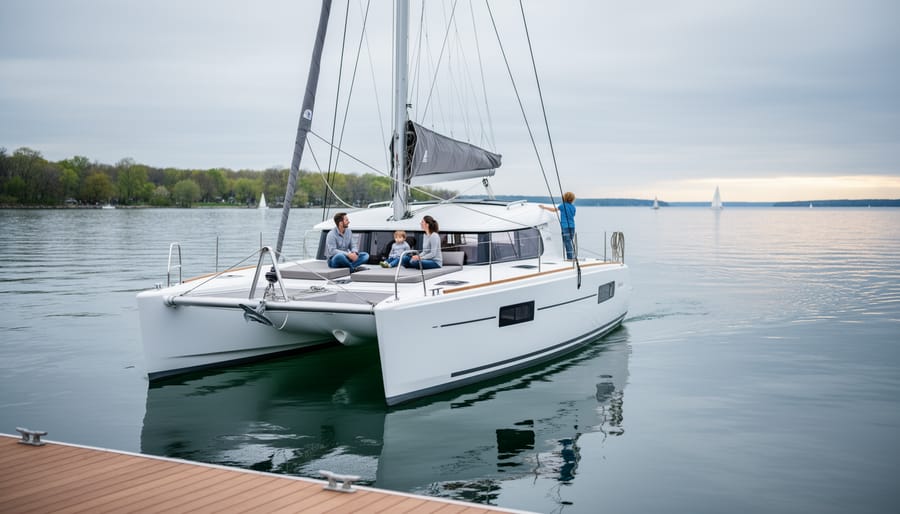
Recreational sailing catamarans deliver unmatched stability, generous living space, and shallow-draft versatility that make them the top choice for leisure sailors exploring the Great Lakes and beyond. With twin hulls that resist heeling and expansive deck layouts perfect for families or extended cruising, these multihulls transform weekend outings into comfortable, safe adventures. Whether you’re considering your first catamaran purchase or upgrading from a monohull, understanding the range of models, performance characteristics, and practical ownership factors will help you find the perfect platform for your sailing goals.
The catamaran market has evolved significantly, offering everything from compact trailerable designs to blue-water cruisers with luxury amenities. Popular sailboat upgrades like solar panels, watermakers, and enhanced sail-handling systems integrate seamlessly with catamaran platforms, making them even more capable for extended voyages. Performance has improved too, with modern designs delivering respectable speed while maintaining the comfort and safety that define the category.
For Ontario sailors, catamarans open new possibilities. Their minimal draft means you can explore shallow bays and tuck into protected anchorages that deeper monohulls must avoid. The wide beam provides stability at anchor and underway, creating a platform that feels more like a floating cottage than a traditional sailboat. Families appreciate the separation twin hulls provide, the reduced motion that keeps everyone comfortable, and the trampolines stretched between hulls that become favorite gathering spots on sunny afternoons.
What We Looked for in a Recreational Catamaran
Choosing the right recreational catamaran means balancing performance, comfort, and practicality. We focused on models that deliver a rewarding sailing experience without overwhelming new-to-catamaran sailors or draining your budget on constant repairs. Each boat on this list earned its place by meeting specific benchmarks that matter to real sailors on the Great Lakes and beyond.
Our selection criteria included:
- Ease of handling: simple rigging, manageable sail plans, and responsive steering that don’t require a full crew
- Comfort and livability: thoughtful layouts, adequate headroom, and livable spaces for extended time aboard
- Build quality: solid construction, proven laminates, and reliable systems that hold up season after season
- Versatility: equally at home on day sails, weekend trips, or longer cruising adventures
- Parts and service availability: accessible support networks in Ontario and Canada, with dealers or owner communities you can tap into
- Value for money: fair pricing relative to features, with reasonable operating and maintenance costs
These factors matter because a catamaran represents a significant investment in your sailing life. You want a boat that fits your skill level, accommodates how you actually sail, and won’t strand you searching for obscure parts or expensive specialists. Whether you’re upgrading from a monohull or stepping into your first catamaran, these criteria help identify models that enhance your time on the water rather than complicate it.
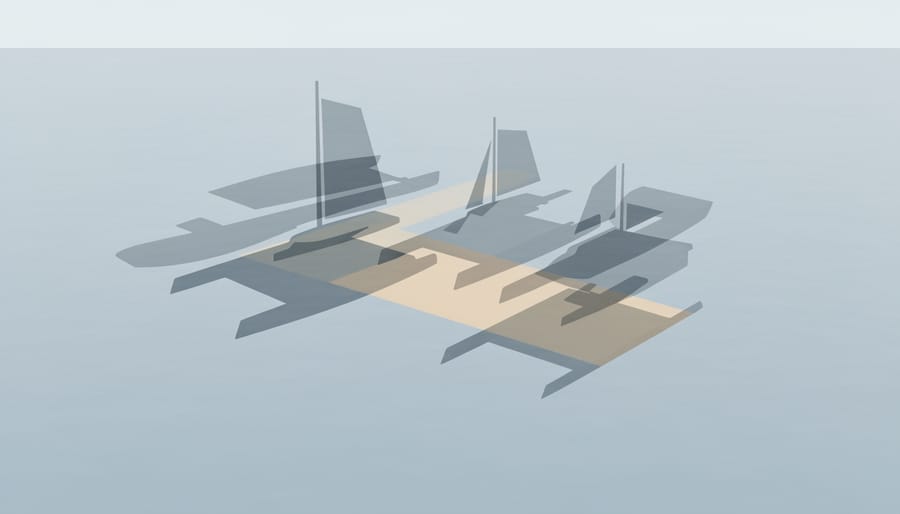
1. Lagoon 42, Best for Comfortable Cruising and Spacious Living
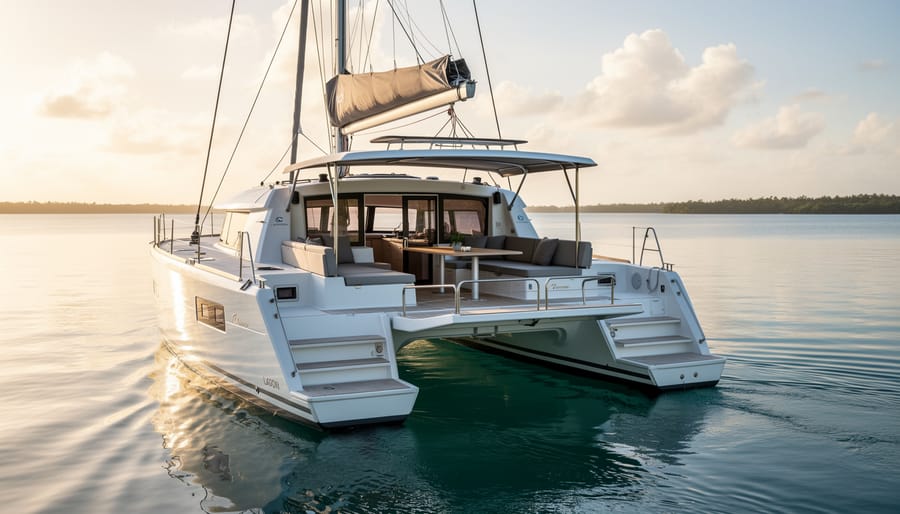
The Lagoon 42 stands out as the benchmark for sailors who want a catamaran that feels more like a floating apartment than a stripped-down racing machine. Step aboard and you’ll immediately notice the cockpit, a massive space that comfortably seats eight for dinner without anyone feeling cramped. The open-plan saloon connects seamlessly to the aft deck, creating an entertaining area that rivals many shoreside patios.
What sets the Lagoon 42 apart is the thoughtful balance between space and sailing performance. The rigging is straightforward, with all lines led aft to the helm, so you can adjust sails without leaving the cockpit. The tuned mast and standing rigging are robust, designed for reliable performance across a range of conditions. You won’t win races against performance cats, but the 42 moves confidently in 10 to 15 knots and handles the occasional blow without drama.
Lagoon offers multiple cabin configurations, from three-cabin owner versions to four-cabin charter layouts. Each cabin gets natural light and ventilation, with proper standing headroom throughout. Build quality is solid, with thick fiberglass layup and well-finished joinery that holds up to hard use.
For extended cruising on Lake Ontario, Georgian Bay, or coastal passages, the Lagoon 42 delivers the range and comfort serious cruisers need. Freshwater tanks hold 200 gallons, the galley is genuinely functional, and the bridgedeck clearance minimizes slamming in chop.
2. Fountaine Pajot Astrea 42, Ideal for Family Adventures and Entertaining
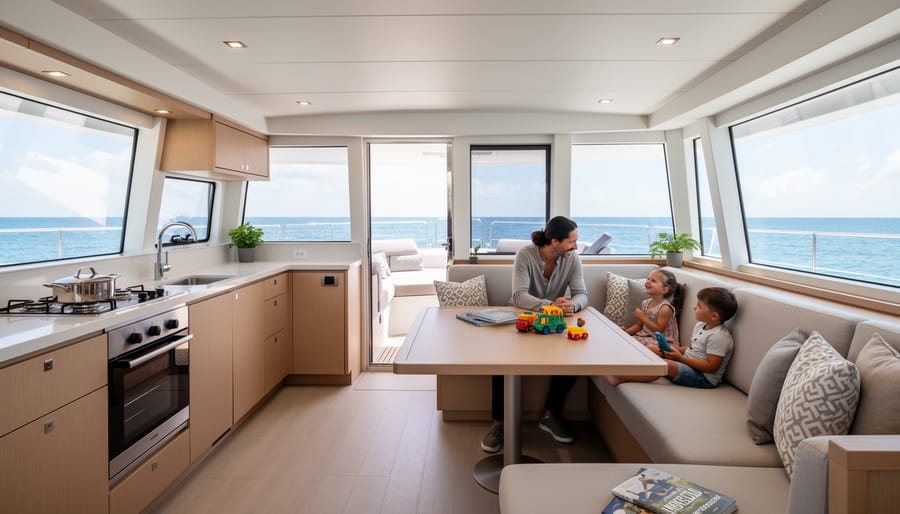
The Fountaine Pajot Astrea 42 stands out as a stellar choice for families and sailors who love to entertain on the water. Its bright, open saloon features panoramic windows that flood the interior with natural light, creating a welcoming atmosphere that rivals many shore-side homes. The clever design maximizes ventilation through strategically placed hatches and ports, keeping everyone comfortable even during warm summer days on Lake Ontario.
What truly sets the Astrea 42 apart is its stable platform. The wide beam and balanced hull design mean kids can move around safely while you’re underway, and guests won’t feel uneasy during cocktail hour at anchor. The spacious cockpit connects seamlessly to the saloon through sliding glass doors, making it easy to host gatherings that flow between indoor and outdoor spaces.
The rigging system is refreshingly straightforward, with all lines led aft to the helm stations. You don’t need a full crew to handle this cat, short-handed sailing is entirely manageable, though basic rig tuning knowledge helps optimize performance. The self-tacking jib simplifies tacking, letting you focus on enjoying the sail rather than coordinating crew movements.
Below deck, the four-cabin layout provides genuine privacy for families or multiple couples. Each cabin feels airy rather than cramped, with proper hanging lockers and natural light. The galley equipment is practical and well-placed, making meal prep while cruising genuinely pleasant rather than a chore.
3. Leopard 40, A Performance-Oriented Cruiser for Active Sailors
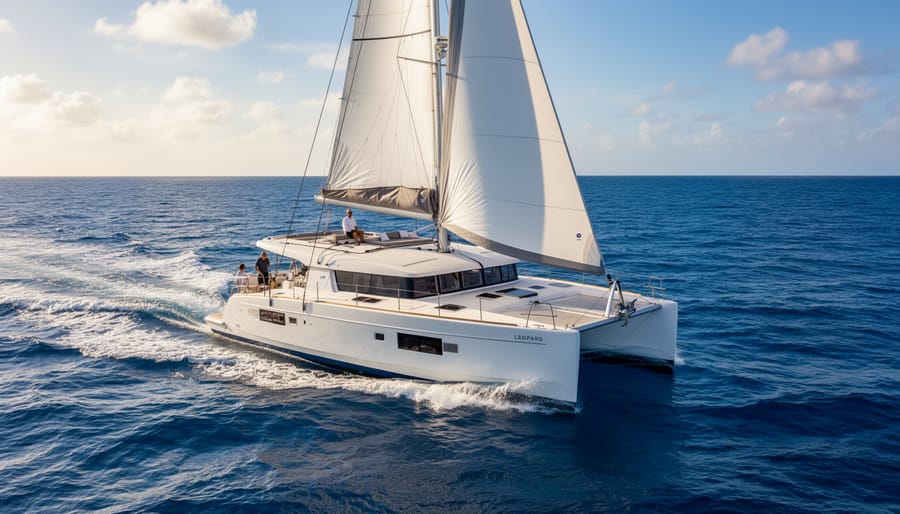
The Leopard 40 strikes a sweet spot between performance under sail and comfortable cruising, making it a favorite among sailors who don’t want to compromise on either front. Built in South Africa by Robertson and Caine, this catamaran delivers responsive handling and solid construction that inspires confidence in varying conditions.
Under sail, the Leopard 40 feels more agile than many cruising cats in its class. The hull design and efficient sail plan allow it to point reasonably well and maintain good speed across a range of wind angles. You’ll notice the difference when beating to windward or making quick passages, this cat rewards active trimming and engagement at the helm. The twin helm stations offer excellent visibility and control, letting you fine-tune your course without sacrificing comfort.
Below deck, the Leopard 40 balances liveability with a performance-minded layout. The saloon is bright and functional, with generous ventilation through hatches and portlights. Three or four cabin versions accommodate families or couples who charter occasionally. The galley is well-positioned, and storage is thoughtfully distributed throughout.
What truly sets the Leopard 40 apart is its extensive dealer and service network. Parts availability is excellent across North America, and the large owner community means you’ll find experienced advice and support easily. For Ontario sailors planning Great Lakes cruising or longer coastal passages, this combination of performance, proven reliability, and strong aftermarket support makes the Leopard 40 a smart investment that grows with your sailing ambitions.
4. Bali 4.3, Perfect for Open-Plan Living and Social Sailing
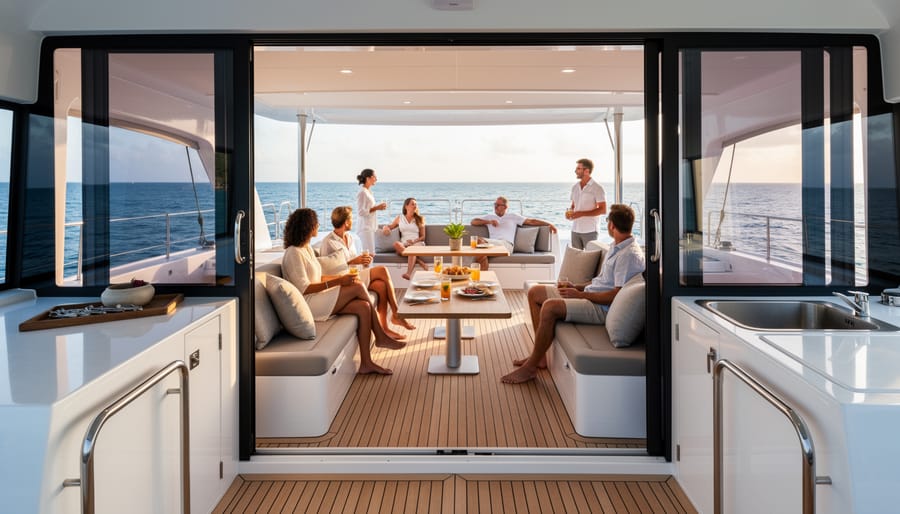
The Bali 4.3 reimagines catamaran living with a radical open-plan layout that blurs the line between interior and exterior. Its signature feature, a tilting garage-style door connecting the saloon to the cockpit, creates one massive 500-square-foot entertaining space when open. There’s no bulkhead separating inside from out, so guests flow naturally between the galley, dining table, and helm stations without stepping through narrow companionways.
This design pays real dividends when you’re anchored off Charleston Lake or hosting friends at the marina. The forward cockpit adds another social zone, complete with integrated seating and a sunshade. You can comfortably entertain a dozen people without anyone feeling cramped.
Despite its spaciousness, the Bali 4.3 handles surprisingly well. Twin helm stations offer excellent visibility, and the self-tacking jib simplifies short-handed sailing. The boat balances easily at seven knots in fifteen-knot winds, making it responsive enough for active sailors who still want catamaran stability.
The tradeoff is privacy. With minimal interior walls, sound travels freely between cabins and the saloon. If your crew values quiet sleeping quarters over communal living, this might not be your boat. But for sailors who treat their catamaran as a floating social club, where the goal is bringing people together rather than separating them, the Bali 4.3 delivers an unmatched experience at anchor or underway.
5. Seawind 1160, A Rugged, Bluewater-Ready Catamaran
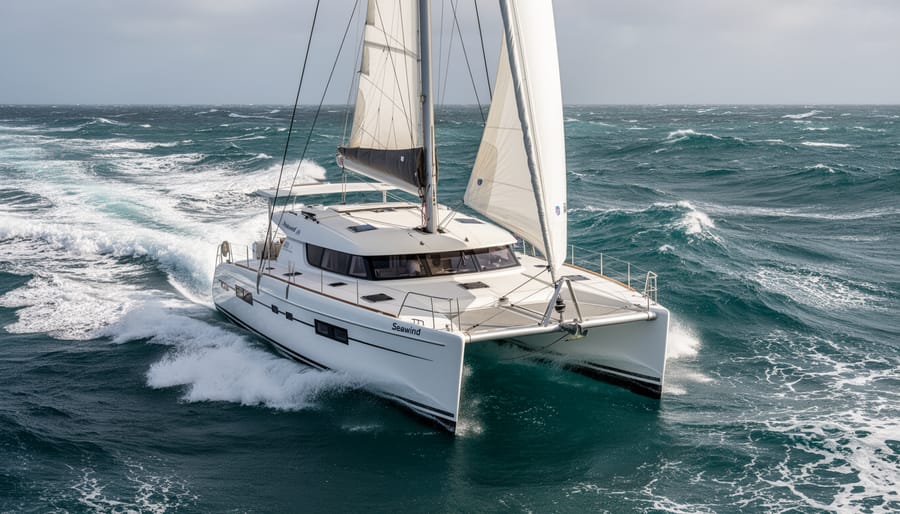
The Seawind 1160 stands out as a serious offshore cruiser built for sailors who demand durability and seaworthiness without giving up the comfort of a catamaran. Engineered in Australia, where rugged bluewater designs are a specialty, this model combines heavy-duty construction with thoughtful cruising features that suit extended voyages or adventurous seasonal trips on the Great Lakes.
What sets the 1160 apart is its solid fiberglass hull laminate and robust bridgedeck structure. While many production catamarans prioritize interior volume, Seawind focuses on structural integrity first. The result is a stiffer, quieter platform that handles chop and rough conditions confidently. Sailors planning multi-week passages or challenging open-water crossings appreciate this kind of build quality.
Under sail, the 1160 performs well for its size. The rig is straightforward and manageable, with good upwind ability and respectable speed in moderate air. It won’t match lighter racing-oriented cats, but it delivers steady, predictable handling that inspires confidence when conditions deteriorate. Dual rudders provide reliable control, and the layout keeps lines accessible from the helm.
Inside, the 1160 offers a practical three- or four-cabin layout with decent headroom and storage. The galley is well-positioned for passage-making, and ventilation is excellent. Large port lights and hatches bring in natural light without compromising strength.
For Ontario sailors eyeing longer cruises beyond the lakes or seeking a catamaran that feels genuinely built to last, the Seawind 1160 delivers the offshore capability and solid engineering you’d want in rougher waters.
6. Nautitech 40 Open, Great for Day Sailing and Weekend Getaways
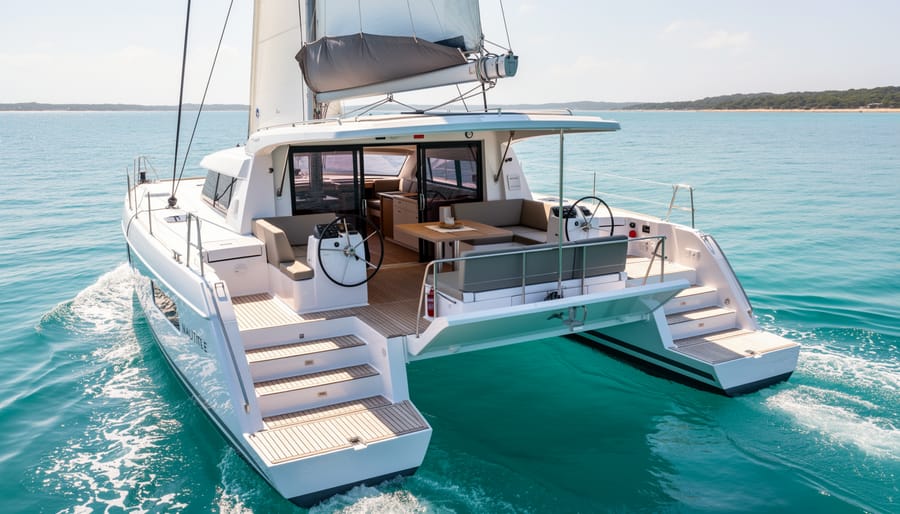
The Nautitech 40 Open strikes an appealing balance for sailors who want responsive performance without sacrificing weekend comfort. Built by Bavaria Group’s French division, this catamaran emphasizes clean lines, efficient sail handling, and an uncluttered deck layout that makes day sailing genuinely enjoyable.
What sets the Nautitech 40 Open apart is its focus on simplicity and speed. The self-tacking jib and streamlined rigging let you adjust course effortlessly, while the open cockpit design keeps weight low and encourages quick tacks. Sailors who’ve grown tired of heavy cruising cats appreciate how eagerly this model responds to the helm, delivering a more connected sailing experience on Ontario’s variable winds.
The cockpit flows seamlessly into the saloon through large sliding glass doors, creating an airy, integrated living space perfect for weekend getaways. Two or three cabin layouts provide comfortable sleeping quarters without the bulk of larger cruising models. French craftsmanship shows in the joinery details, thoughtful storage solutions, and quality fittings throughout.
Performance numbers back up the design philosophy. The Nautitech 40 Open consistently hits higher speeds under sail than comparable cruising-focused catamarans, making it ideal for sailors who want to cover distance efficiently during weekend trips around the Great Lakes. The shallow draft opens up anchorages that deeper keels can’t access, expanding your cruising options.
If you prioritize active sailing over extended liveaboard amenities, the Nautitech 40 Open delivers a modern, performance-oriented platform that won’t bore you after the first season.
7. Gemini Freestyle 37, Budget-Friendly and Trailerable for Local Adventures
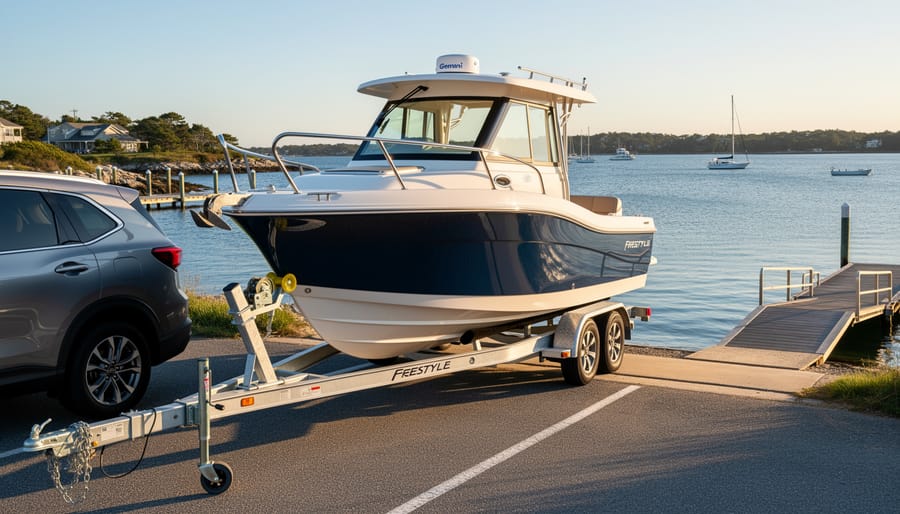
The Gemini Freestyle 37 opens catamaran sailing to enthusiasts who might find larger models out of reach financially or logistically. Priced well below most cruising catamarans, this American-built design delivers genuine twin-hull performance without requiring a marina slip or significant budget commitment.
Trailerability sets the Freestyle 37 apart. At just over 14 feet of beam when folded, it moves legally on highways behind a suitable tow vehicle, letting you launch where you want rather than committing to one home port. This flexibility proves ideal for Ontario sailors eager to explore different lakes and rivers throughout the season. The shallow 2.5-foot draft with boards up means you can venture into protected bays, shallow anchorages, and skinny water that excludes deeper-draft boats.
Onboard, the layout balances sailing performance with comfortable weekending. The bridgedeck cabin provides standing headroom and basic galley facilities, while the hulls offer sleeping space for four. It’s not luxurious, but it’s practical and easy to maintain, critical advantages when you’re sailing seasonally and storing the boat over Ontario winters.
The strong Gemini owner community shares modifications, maintenance tips, and cruising advice readily. Parts availability remains solid even for older models, and the straightforward design encourages hands-on work. You can even freeze-dry provisions at home to stock the compact galley efficiently. For sailors prioritizing accessibility and versatility over long-range cruising amenities, the Freestyle 37 delivers genuine catamaran advantages at a manageable price point.
Maintaining Your Catamaran for Long-Term Enjoyment
Catamarans demand a slightly different maintenance approach than monohulls, but staying on top of these tasks keeps your boat safe and sailing smoothly for years.
Start with the structural heart of your cat: the crossbeams and bridge deck. These components bear enormous loads and connect the two hulls, so inspect them annually for cracks, corrosion, or flexing. Pay special attention to the attachment points where the beams meet the hulls, moisture intrusion here can lead to serious structural issues. Check rudders and daggerboards for play in their bearings and damage to the blades; catamarans often sail in shallower water, making these vulnerable to groundings.
Managing dual engines means double the routine: oil changes, impellers, zincs, and fuel filters for both powerplants. Stagger your service schedule if possible, so you always have one engine in peak condition. Keep an eye on your rigging, too. The wider beam puts different stress on shrouds and stays compared to monohulls, and the mast step area requires regular inspection.
Key catamaran maintenance tasks include:
- Inspect crossbeams and hull-to-beam connections for cracks, corrosion, and moisture
- Service both engines regularly, including oil, filters, impellers, and sacrificial zincs
- Check rigging tension and examine all shrouds, stays, and chainplate attachments
- Monitor hull-to-deck joints and bulkheads for signs of flexing or delamination
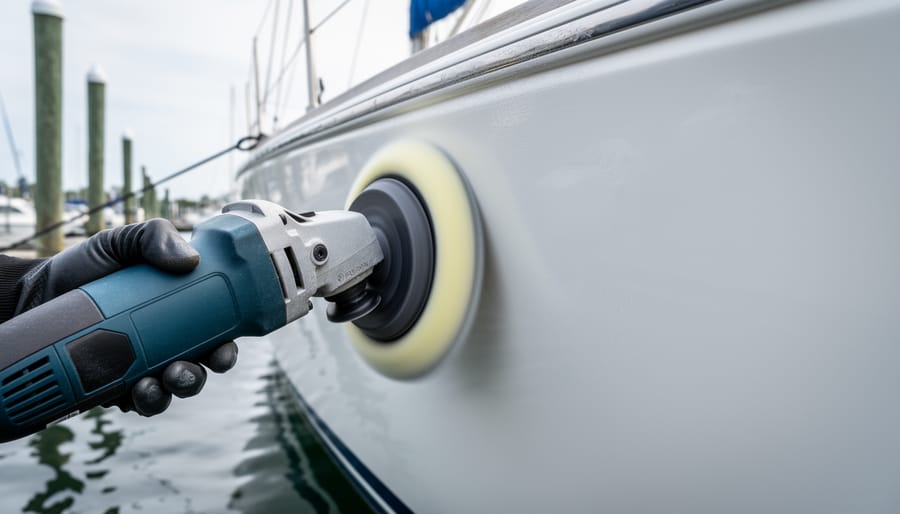
- Apply antifouling to both hulls and inspect through-hulls in each side
Canada Sailing Community in Kingston offers expert catamaran maintenance and custom upgrades tailored to the unique demands of multihull sailing. Regular professional inspections catch small problems before they become expensive headaches, letting you focus on what matters, enjoying your time on the water.
Frequently Asked Questions About Recreational Sailing Catamarans
Are catamarans hard to sail?
Modern recreational catamarans are generally easier to handle than many monohulls due to their stability and forgiving nature. The twin engines make docking straightforward, and most models sail well even with reduced crew.
What’s the best size catamaran for cruising the Great Lakes?
A 38 to 42-foot catamaran offers the ideal balance of comfort, performance, and manageability for Great Lakes cruising. Smaller models like the Gemini Freestyle 37 work well for day sailing and exploring shallower waters.
How much do recreational catamarans cost?
Entry-level used catamarans start around $150,000 CAD, while popular mid-range models like the Lagoon 42 or Fountaine Pajot Astrea 42 typically run $600,000 to $900,000 new. Ongoing costs include dual-engine maintenance, slip fees, and insurance.
What are the berthing considerations for catamarans?
Catamarans require wider slips than monohulls, typically 20 to 24 feet for a 40-footer, which can increase mooring costs and limit marina options. Check availability and pricing at your preferred Great Lakes marinas before purchasing.
If you’re planning to upgrade your catamaran with custom modifications or need guidance on optimizing your setup for local conditions, consult experienced professionals who understand the specific demands of Ontario sailing. Single-handing is absolutely possible on most recreational catamarans, especially models under 42 feet equipped with electric winches and furling systems. Many sailors successfully cruise solo once they’ve practiced docking procedures and invested in helpful aids like bow thrusters and autopilot systems.
Recreational sailing catamarans offer an unmatched combination of stability, space, and performance that transforms time on the water. Whether you’re drawn to the open-plan luxury of the Bali 4.3, the bluewater capability of the Seawind 1160, or the accessible adventure potential of the Gemini Freestyle 37, there’s a catamaran that aligns with your sailing vision and budget.
Choosing the right model starts with honest assessment of how you’ll actually use it. Day sailing around Lake Ontario demands different features than extended cruising on Georgian Bay. Your crew size, sailing experience, and dock availability all shape which catamaran makes sense. The models we’ve covered span a wide range of capabilities and price points precisely because recreational sailors have diverse needs.
Ontario’s sailing community continues to grow more catamaran-savvy, with improved access to parts, knowledgeable service providers, and fellow owners who share maintenance tips and cruising routes. Regular upkeep keeps these versatile vessels performing at their best season after season.
If you’re ready to enhance your sailing adventures with a catamaran, or if you already own one and want to optimize its systems, Canada Sailing Community in Kingston offers expert rigging, custom modifications, and maintenance services tailored to multihull sailors. Your ideal catamaran experience starts with the right boat and the right support network behind it.