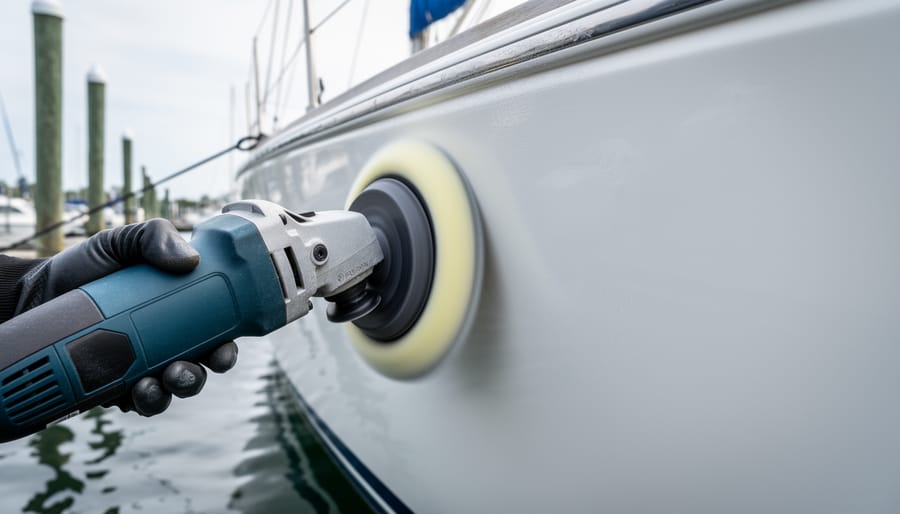
Inspect your yacht mast from deck to masthead before every racing season, looking specifically for hairline cracks in welds, corrosion around fittings, and elongated bolt holes that signal structural fatigue. Run your hands along spreader tips and tangs—any roughness you feel will destroy your sails mid-race. Check for mast bend under load by sighting up the luff track with halyards tensioned; excessive pumping indicates either poor tuning or compromised structural integrity that costs you pointing ability and boat speed.
Measure your standing rigging tension with a gauge rather than guessing—uneven loads create mast compression problems that reduce your rig’s lifespan by years and compromise performance in heavy air. Port and starboard cap shrouds should read within 10% of each other, while proper fore-and-aft rake directly impacts helm balance and upwind performance. Document these baseline measurements so you can track changes throughout the season.
Replace running rigging every two seasons minimum for racing applications, as stretched halyards and worn blocks create friction that translates to slower sail changes and lost races. Internal halyards hide wear until failure, so pull them annually for inspection even if they look acceptable at deck level.
Consider a professional rig tune before major regattas—the investment typically pays for itself in improved VMG and reduced equipment failures. Understanding your mast’s specific characteristics, from bend curve to compression limits, transforms maintenance from reactive repairs into proactive performance optimization that keeps you competitive on Ontario waters.
Understanding Your Yacht Mast’s Anatomy and Function
Racing Mast vs. Cruising Mast: What Sets Them Apart
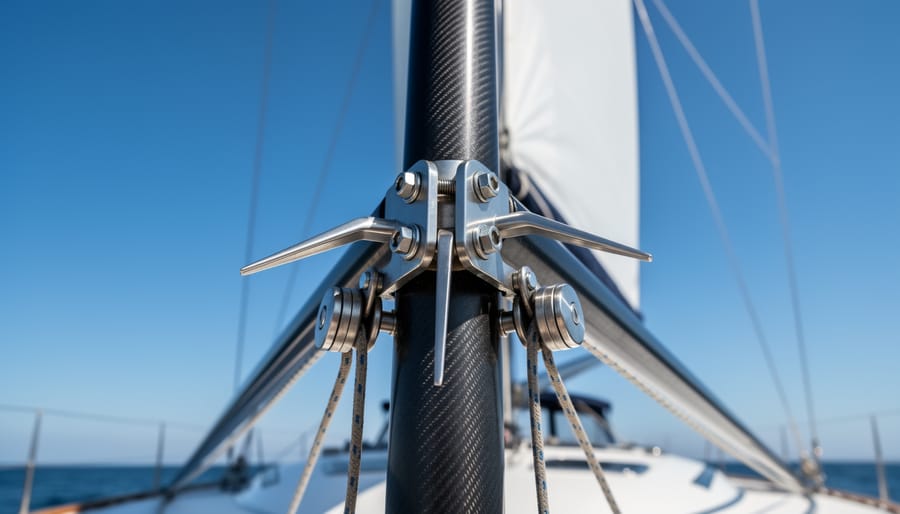
When you’re deciding between a racing mast and a cruising mast, you’re really choosing between two different design philosophies that reflect how you sail. Racing masts are built with one goal in mind: speed. Every component is engineered to maximize performance, even if that means sacrificing some durability or ease of use.
The most noticeable difference is weight. Racing masts use lighter, stiffer materials like high-grade carbon fiber or advanced aluminum alloys. A lighter mast means less weight aloft, which translates to better stability and faster acceleration when the wind shifts. Cruising masts, by contrast, prioritize reliability and longevity, typically using heavier-gauge aluminum that can handle years of coastal exploring without constant attention.
Tuning range is another key distinction. Racing masts demand precise, frequent adjustments to standing rigging tension. You’ll often see racers tweaking their rig between races or even between legs to optimize sail shape for changing conditions. The hardware reflects this need, with more sophisticated adjustment systems and multiple spreader configurations. Cruising masts are typically set up once and require minimal adjustment, making them more forgiving for sailors who’d rather focus on the journey than constant tweaking.
Performance characteristics differ dramatically too. Racing masts are stiffer laterally, reducing unwanted bend and maintaining optimal sail shape under load. This stiffness comes at a cost though—racing rigs require more vigilant inspection and maintenance. Here in Ontario’s competitive sailing community, many racers develop maintenance schedules that would seem excessive to cruisers, but that dedication keeps their boats at peak performance throughout the season.
Signs Your Mast Needs Attention Before Racing Season
When to Schedule a Professional Mast Survey
While regular DIY inspections are valuable, certain situations demand the expertise of a professional rigger or marine surveyor. Understanding when to call in the pros can save you from costly failures and keep you competitive on the water.
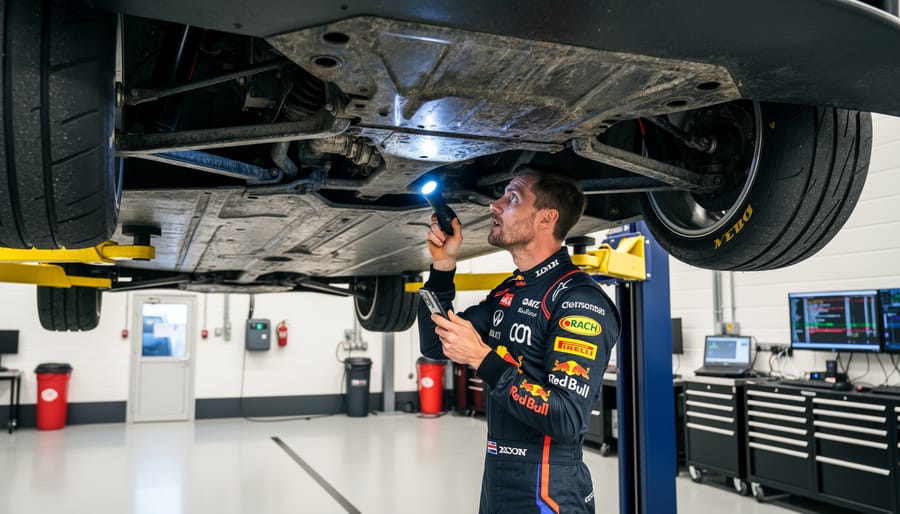
Schedule a professional mast survey at least every five years, or more frequently if you’re racing aggressively. Before purchasing a used boat, always invest in a thorough mast inspection—hidden damage or fatigue could derail your racing season before it begins. If you’ve experienced a grounding, collision, or knockdown, don’t hesitate to get your rig professionally assessed, even if everything looks fine at first glance. These incidents can create internal damage that’s invisible to the untrained eye.
Professional surveyors bring specialized equipment and trained eyes to the job. They’ll use dye penetrant testing to reveal hairline cracks in fittings, ultrasonic thickness gauges to measure corrosion in aluminum spars, and tension gauges to verify proper rig tune. They’ll inspect every swage fitting under magnification, check for elongated bolt holes, and assess the condition of internal halyards and wiring that you simply can’t see during routine checks.
Before the surveyor arrives, prepare documentation of your mast’s age, previous repairs, and any incidents. Clean the mast section and remove sail covers so they can work efficiently. Have your maintenance log ready and note any concerns you’ve observed during your own inspections.
If you’re noticing persistent tuning problems, unexplained performance losses, or planning major upgrades like adding new gear or changing your sail plan, a professional survey provides the foundation for informed decisions. The Ontario sailing community is tight-knit—ask fellow racers at your yacht club for surveyor recommendations. Their experience and expertise complement your hands-on knowledge, creating a comprehensive approach to mast care.
Mast Tuning Fundamentals for Racing Performance
Setting Mast Rake for Optimal Weather Helm
Mast rake—the angle your mast leans aft from perfectly vertical—is one of your most powerful tuning tools for achieving that sweet spot of weather helm. Too little rake and your boat feels indifferent, wandering without feedback. Too much and you’ll fight the helm all day while your crew wonders why their arms are tired.
Start by measuring your current rake. The simplest method uses a halyard: hoist it to the masthead, pull it tight to the transom, and mark where it touches. Move that same halyard forward to the base of the mast and measure the distance from your mark to the transom. This gives you a baseline measurement in inches or centimeters that you can adjust from.
For most modern racing boats on the Great Lakes, you’re targeting 3-5 degrees of rake, though your class rules and sail plan will dictate specifics. Increasing rake moves your center of effort aft, creating more weather helm and often improving pointing ability—critical when you’re clawing upwind in a tight fleet on Lake Ontario.
To adjust rake, you’ll work with your forestay and backstay tension, along with the position of your mast step if it’s adjustable. Loosen the backstay slightly, tighten the forestay turnbuckle, and you’ll reduce rake. Reverse the process to increase it.
Test your changes in moderate conditions first—8-12 knots is ideal. You want helm feedback that’s responsive but not exhausting, typically requiring 3-5 degrees of weather helm to maintain course upwind.
Controlling Mast Bend to Shape Your Sails
Mastering mast bend is one of those skills that separates good sailors from great ones, especially when you’re chasing that extra tenth of a knot around the race course. Your mast isn’t meant to be a rigid pole—it’s designed to flex and work harmoniously with your sails to maximize performance in varying conditions.
Let’s start with the basics. Pre-bend refers to the natural curve built into your mast when the rig is tensioned but without sailing loads applied. You’ll typically see this athwartships curve when looking up the mast track. Induced bend, on the other hand, is the additional curve you create while sailing using your rig controls—particularly useful for depowering in heavy air or fine-tuning sail shape in lighter conditions.
To measure mast bend accurately, you’ll want a few simple tools in your kit. A measuring tape and a straightedge work for basic assessments dockside. Many racers use a mast bend gauge or simply measure the gap between a tight string running from gooseneck to masthead and the mast itself at the spreaders. This gives you a quantifiable number to work with as you tune.
Your primary bend controls are the backstay and checkstays (running backstays). Increasing backstay tension pulls the masthead aft, creating more bend that flattens your mainsail—perfect for depowering in stronger winds. Checkstays offer more precise control, allowing you to induce bend without overtensioning the headstay. The key is matching your mast curve to what your sailmaker designed into your mainsail. Most quality sails come with tuning guides specifying recommended bend measurements for different wind ranges. Start conservative, take notes on what works in Ontario’s varying conditions, and you’ll develop an instinct for dialing in that perfect shape.

The Mast and Rigging Overhaul Process
Coordinating Mast Work with Rigging Replacement
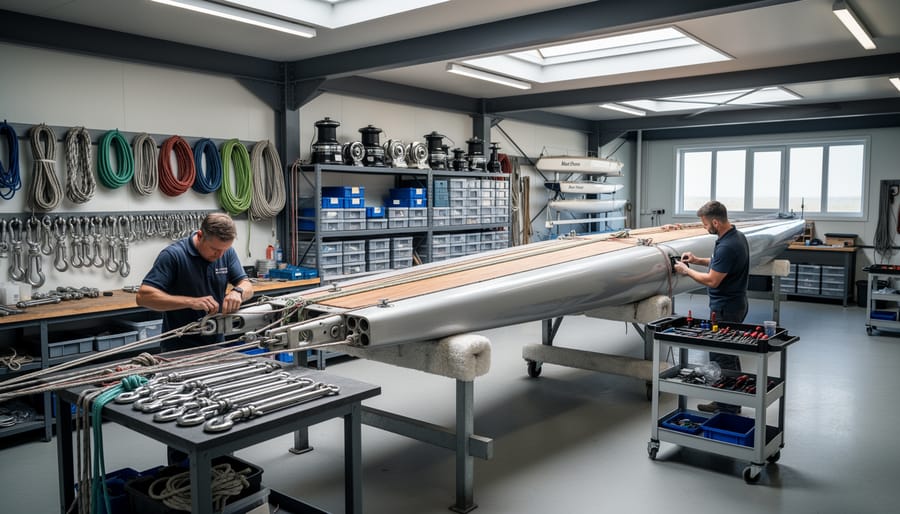
When you’re planning significant mast work, timing it alongside rigging replacement makes tremendous sense both practically and financially. Think of your mast and rigging as an integrated system—when one component gets refreshed, the others benefit from coordinated attention.
The most efficient approach involves scheduling these projects together during your boat’s off-season haul-out. Here in Ontario, that typically means late fall or early winter, giving riggers and mast specialists ample time for thorough work before spring commissioning. This coordination eliminates the need for multiple mast pulls, saving you haul-out fees and yard time that can easily run several hundred dollars per instance.
Budget-wise, bundling these projects often yields discounts. Many rigging professionals offer package pricing when handling both standing and running rigging alongside mast inspection and maintenance. You’re looking at significant investments regardless—new standing rigging might run $2,000-$5,000 depending on your boat size, while comprehensive mast work adds another $1,500-$4,000. However, coordinating saves labour costs and ensures compatibility between all components.
The performance synergy matters tremendously for competitive sailors. New rigging paired with refreshed sheaves, properly serviced halyards, and updated masthead fittings creates a system that works in harmony. You’ll notice smoother sail handling, better sail shape control, and reduced friction throughout the rig. Fresh spreader boots, updated tangs, and renewed electrical connections complement your new wire or rod rigging perfectly.
Start planning at least six months ahead, especially if you’re racing the following season. Contact riggers early—experienced professionals book up quickly as commissioning season approaches. Request a comprehensive quote covering both mast and rigging work, and discuss which components truly need replacement versus refurbishment. This collaborative approach ensures your entire rig performs optimally when you’re pushing hard on the racecourse.
Upgrading Your Mast for Competitive Advantage
When you’re ready to move beyond basic maintenance and take your racing performance to the next level, strategic mast upgrades can deliver measurable advantages on the racecourse. Whether you’re competing in club races on Lake Ontario or preparing for regional championships, understanding where to invest your time and budget during a mast overhaul can make the difference between mid-fleet finishes and podium positions.
Weight reduction represents one of the most effective upgrade paths available to competitive sailors. Replacing heavy standing rigging hardware with high-modulus carbon fiber alternatives or switching to lighter shackles and tangs can shift your boat’s center of gravity lower, improving stability and responsiveness. Even small weight savings aloft translate to noticeable improvements in pointing ability and reduced heel angles. Consider working with your local sailing community to identify which weight-saving measures have proven most effective for your class, as Ontario racers often share insights about what works in our specific conditions.
Aerodynamic refinements might seem subtle, but they accumulate real gains over the course of a season. Streamlined masthead fittings reduce windage, while carefully faired mast sections minimize turbulence that can disturb airflow over your sails. Some competitive sailors invest in custom-built sail track systems that sit flush with the mast profile, eliminating the drag created by traditional external tracks. These modifications require precision work but pay dividends when racing in the light to moderate winds common on Ontario waters.
| Upgrade Type | Performance Benefit | Approximate Cost Range | Class Rule Considerations |
|---|---|---|---|
| Carbon fiber spreaders | Weight reduction, improved stiffness | $800-2,500 | Check one-design restrictions |
| High-modulus rigging wire | Reduced stretch, less windage | $1,200-4,000 | Usually permitted |
| Streamlined masthead assembly | Lower drag, better sail shape | $500-1,800 | Verify fitting specifications |
| Internal halyards conversion | Cleaner airflow, reduced windage | $600-2,200 | Generally allowed |
Hardware upgrades deserve careful consideration during any overhaul. Modern low-friction rings for halyards and control lines reduce effort and improve responsiveness, letting you make sail adjustments quickly during tactical maneuvers. Upgraded tangs and chainplates fabricated from higher-grade materials provide better load distribution and increased safety margins when pushing hard upwind.
Always verify that your planned modifications comply with your class rules before proceeding. One-design classes maintain strict equipment regulations, while handicap racing offers more flexibility. Document all changes carefully, as this information proves valuable for rating certificates and future buyers who appreciate a well-upgraded racing platform.
Maintaining Your Mast Between Racing Seasons
Your mast works hard during racing season, so giving it proper attention during the off-season pays dividends when you’re back on the water chasing the fleet. Ontario’s freeze-thaw cycles can be particularly tough on rigging, making a solid maintenance routine essential for preserving that competitive edge you’ve worked so hard to achieve.
Start your winterization by giving the mast a thorough freshwater wash to remove salt residue and grime accumulated during the season. Pay special attention to hardware and fittings where corrosion loves to hide. Once clean, inspect all fasteners, tangs, and spreader bases for wear or stress cracks. This is the perfect time to spot issues that might have developed during intense racing conditions.
For storage, keep your mast in a horizontal position with proper support at regular intervals to prevent sagging. If you’re storing it outdoors (covered, of course), ensure it’s elevated off the ground to avoid moisture contact. Remove all running rigging and inspect each line for wear, replacing anything questionable before next season. Standing rigging should be wiped down with a light coating of moisture-displacing lubricant to protect against Ontario’s humidity.
Pre-season preparation is where champions are made. About a month before launch, reassemble your rig and check all measurements against your tuning guide. Replace any suspect hardware now rather than discovering problems during your first race. Test all halyards and check blocks for smooth operation. A sticky halyard mid-race can cost you positions you’ll never recover.
During the active season, develop a post-race inspection habit. A quick visual check of critical attachment points, spreader tips, and clevis pins takes only minutes but can prevent catastrophic failures. Keep a maintenance log noting any adjustments or observations. Many successful racers in our local fleet will tell you that consistent attention to detail makes the difference between a podium finish and watching from behind.
Your mast isn’t just an aluminum pole holding up canvas—it’s the engine room of your racing performance. Throughout this article, we’ve explored how proper inspection, tuning, and maintenance translate directly into measurable advantages on the racecourse. A well-tuned mast means better pointing ability, increased boatspeed, and the confidence to push harder when it matters most.
Now’s the time to take action. Walk down to your boat this weekend and give that mast a thorough assessment. Check for corrosion, inspect your standing rigging, and honestly evaluate when you last had a professional tune. Those small adjustments to prebend, rake, and tension settings can shave seconds off every leg—seconds that accumulate into winning margins over a season of racing.
Don’t hesitate to reach out to the sailing community here in Ontario. Whether you’re based out of Toronto, Kingston, or sailing the North Channel, local riggers and experienced racers are invaluable resources. Many yacht clubs host tuning clinics where you can learn alongside fellow competitors, sharing knowledge and building friendships that enhance your enjoyment of the sport.
The satisfaction of crossing the finish line knowing your boat is performing at its peak is unmatched. Proper mast care isn’t just about maintaining equipment—it’s about respecting the craft of sailing and maximizing every moment on the water. Your mast deserves that attention, and your racing results will prove it worthwhile.