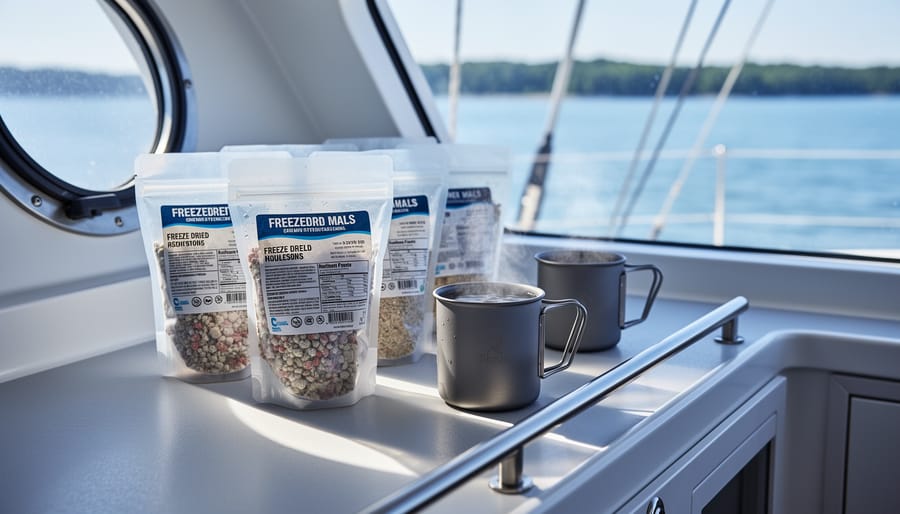
Freeze drying at home transforms fresh provisions into lightweight, shelf-stable meals that last years without refrigeration. This preservation method removes 98-99% of moisture while maintaining nutritional value and taste, making it perfect for extended cruising on the Great Lakes or multi-day races where weight and storage matter.
You can start freeze drying with a dedicated home unit ranging from $2,000 to $4,000, or experiment with dry ice methods for under $50. The investment pays off quickly when you compare homemade freeze-dried meals at roughly $2-3 per serving against commercial options costing $8-15. For sailors managing tight galley space and weight restrictions, this difference matters.
The process works by freezing food solid, then creating a vacuum that turns ice directly into vapor without passing through a liquid state. What you get are meals that rehydrate in minutes with just boiling water, retain their original shape and flavor, and pack down to a fraction of their original weight. A week’s worth of provisions that normally fills half your cooler becomes a compact stack of bags you can tuck anywhere.
Home freeze drying lets you control ingredients, accommodate dietary restrictions, and preserve seasonal Ontario produce at peak freshness. You’ll create custom meal plans suited to your crew’s preferences rather than settling for whatever’s available at the marine supply store. The learning curve is shorter than you’d think, and the results transform how you provision for any trip longer than a weekend sail.
Why D-I-Y Freeze Dry Makes Sense for Sailors
When you’re provisioning for a week-long cruise across Lake Ontario or planning a longer passage, the math on traditional canned and fresh foods starts working against you. Every kilogram counts when you’re trying to keep your boat quick and responsive. Freeze-dried provisions can cut your food weight by 80-90% compared to their fresh equivalents, delivering the same weight savings offshore racers chase through rigging upgrades.
The shelf life advantage is equally compelling. While your carefully packed fresh vegetables wilt after a week in the cooler, freeze-dried foods last 20-25 years when properly stored. You can prep provisions during winter months, stock your boat in spring, and draw from that inventory all season without worrying about spoilage. This matters whether you’re caught in an unexpected calm or simply want the freedom to extend a trip without rationing.
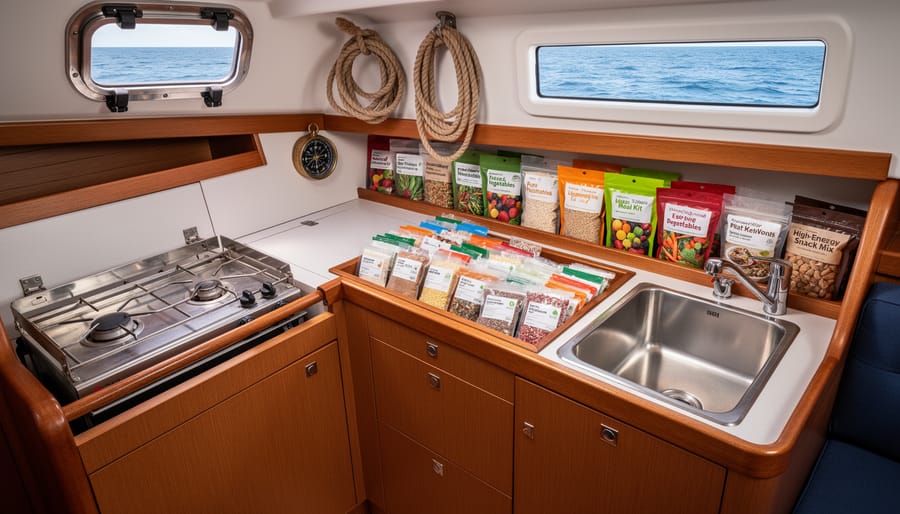
Space is always at a premium in a sailboat galley. Freeze-dried foods pack into roughly a third of their original volume, and you’re not hauling around water weight that you already have in your tanks. A week’s provisions for four people can fit in a single locker, leaving room for spare parts and safety gear that matter more than bulky cans.
The financial case builds over time. Yes, a home freeze dryer costs $2000-3000 upfront, but commercial freeze-dried meals run $12-15 per serving. If you provision regularly, you’ll break even after 200-250 meals. Processing your own chicken, vegetables, and complete dinners costs $2-4 per serving, and you control exactly what goes in. No mystery ingredients, no excess sodium, no compromises for crew members with allergies or preferences.
That customization deserves emphasis. You know your crew’s tastes, dietary restrictions, and what actually works in rough conditions. D-I-Y freeze drying lets you build a provisioning strategy around real needs rather than whatever’s available at the chandlery.
Understanding the D-I-Y Freeze Drying Process
Freeze drying removes moisture through a clever three-stage process that happens inside a sealed chamber. First, your food gets frozen solid, typically to around -40°F. This initial deep freeze locks water molecules in place and prevents ice crystals from damaging cell walls, which is why rehydrated freeze-dried foods maintain their original texture better than dehydrated alternatives.
Next comes the vacuum stage. The machine creates an extremely low-pressure environment inside the chamber, dropping it to about 1/1000th of normal atmospheric pressure. This might sound technical, but it’s this vacuum that makes the magic happen.
In the third stage, gentle heat is applied while the vacuum holds steady. This combination triggers sublimation, the direct transformation of ice into water vapor without passing through a liquid phase. The water molecules simply evaporate away, leaving behind the food’s structure and nutrients intact. Think of it like freeze-frame photography for your provisions: everything stays exactly where it was, just without the water.
This process preserves up to 97% of nutrients, compared to 50-60% retention with traditional dehydrating. The lower temperatures mean vitamins, enzymes, and delicate compounds aren’t cooked away. Flavor compounds survive too, which is why freeze-dried strawberries taste vibrantly fresh when rehydrated, while dehydrated ones often taste flat or concentrated.
For sailors, this preservation quality translates to provisions that actually taste good months into a passage. A freeze-dried beef stew rehydrates into something recognizable as dinner, not survival rations. The complete moisture removal also means lighter weight and genuine shelf stability without refrigeration, critical advantages when every pound matters and galley space runs tight.
D-I-Y Freeze Dry Equipment Options for 2026
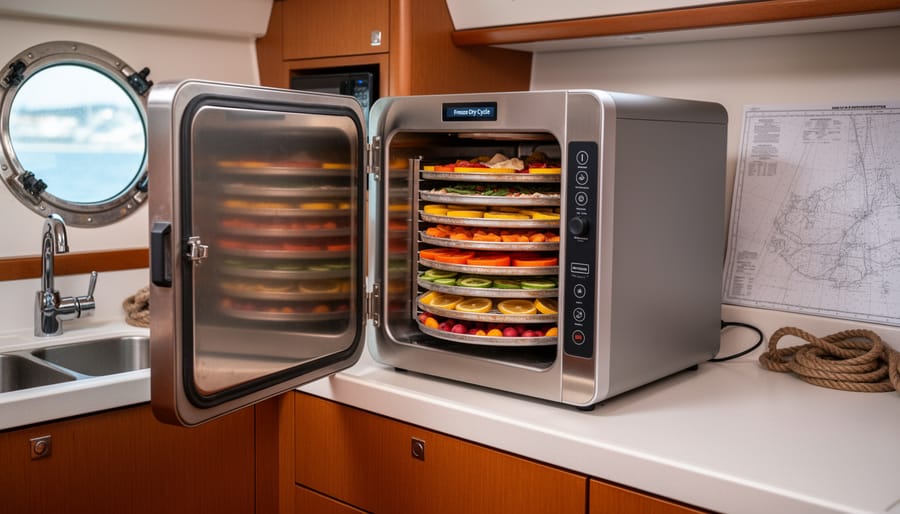
Choosing the right D-I-Y freeze dry equipment starts with understanding your provisioning needs and available space. Home freeze dryers have come a long way in recent years, and 2026 models offer sailors more options than ever, from compact units suitable for apartment dwellers to larger machines that can process a week’s worth of provisions in a single batch.
The market breaks down into three main categories based on tray capacity. Small units handle roughly four to seven pounds of fresh food per cycle, medium models process seven to ten pounds, and large machines can tackle ten to sixteen pounds at once. For sailors with limited shore-side storage, the small and medium models make the most sense, they fit on a counter or in a closet when not in use, though you’ll need to plan space for their operation since they run for 20 to 40 hours per batch.
| Size Category | Batch Capacity (Fresh) | Approximate Cost | Best For |
|---|---|---|---|
| Small | 4-7 lbs | $2,200-$2,800 | Weekend sailors, limited storage, testing D-I-Y freeze dry |
| Medium | 7-10 lbs | $2,800-$3,600 | Regular cruisers, couple or small crew provisioning |
| Large | 10-16 lbs | $3,800-$5,200 | Extended passages, large crews, racing teams |
Entry-level models in 2026 include basic controls and manual cycle management, which works fine once you learn your machine’s quirks. Advanced units offer programmable cycles, smartphone connectivity for monitoring, and sensors that detect when the batch is completely dry, convenient if you’re running batches overnight or while you’re at work.
When evaluating D-I-Y freeze dry equipment, prioritize these factors: vacuum pump quality (oil pumps are quieter and more reliable than older designs), insulation (better insulation means lower electricity costs), tray configuration (removable trays simplify cleaning), and manufacturer support. Check warranty coverage carefully, most offer one to three years on parts, with extended options available.
One consideration specific to sailors: noise level. These machines aren’t silent, and if you’re freeze drying in a condo or apartment between sailing seasons, look for models with noise ratings below 60 decibels. The vacuum pump runs throughout the cycle, so a quieter machine keeps peace with neighbors and household members alike.
Best Foods to D-I-Y Freeze Dry for Sailing Trips
Meals and Proteins
Complete meals freeze dry beautifully and rehydrate quickly in the galley. Cook your favorite pasta dishes, stews, chili, or curries at home, then freeze dry them in portioned containers that match your crew size. A beef stew that weighs two pounds fresh becomes just four ounces freeze-dried, perfect for limited storage.
Cooked meats deserve special attention. Ground beef, diced chicken, and pulled pork freeze dry exceptionally well when cooked thoroughly and drained of excess fat. Spread proteins in thin, even layers on trays for uniform drying. Freeze-dried ground beef rehydrates in ten minutes with hot water, ready for tacos or pasta sauce.
Beans and legumes are provisioning gold. Pre-cook black beans, chickpeas, or lentils until tender, drain well, and freeze dry them. They rehydrate faster than dried beans and retain better texture. Mix them into meals or rehydrate separately as protein-rich sides.
Pre-portion everything before freeze drying. Use measured amounts that feed your typical watch, then package each portion separately. Label clearly with contents, weight, and water needed for rehydration. This approach eliminates guesswork in a rolling galley and makes meal planning simple, much like fine-tuning gear for consistent performance. Season conservatively before freeze drying since flavors intensify during the process. You can always add more seasoning when rehydrating aboard.
Fruits and Vegetables
Berries top the list for D-I-Y freeze dry success, strawberries, blueberries, and raspberries come out beautifully crisp and retain vibrant color. Slice strawberries before processing, but smaller berries can go in whole. They rehydrate in minutes when added to oatmeal or yogurt, and many sailors love them as crunchy snacks straight from the bag during watch.
Vegetables like peas, corn, and bell peppers freeze dry exceptionally well and rehydrate quickly in hot water or soup. Dice peppers uniformly for consistent drying. Cooked vegetables generally work better than raw, blanch green beans or broccoli first to preserve color and texture. Mushrooms, both raw and sautéed, become intensely flavored and reconstitute perfectly in pasta or rice dishes.
Tropical fruits like mango, pineapple, and banana create sweet, shelf-stable snacks that pack serious flavor punch. Cut fruit into thin, even slices for faster processing and better results. Apples and peaches work well too, though you’ll want to treat them with lemon juice to prevent browning.
The real advantage shows up in the galley: toss freeze-dried vegetables directly into pasta water during the last few minutes of cooking, or add berries to pancake batter for instant fruit flavor without extra weight or refrigeration.
Freeze-Dried Candy and Treats
Freeze-dried candy transforms into something entirely different from its original form, and that’s exactly what makes it so appealing for sailors looking to add lightweight treats to their provisions. The process turns chewy gummy bears into airy, crunchy puffs that melt on your tongue, while Skittles expand and develop a brittle texture that releases intense bursts of flavor. Marshmallows become crispy clouds that weigh almost nothing yet deliver the same sweetness. These treats take up far less space than their original versions and won’t melt in the heat or stick together in your storage containers.
Beyond the novelty factor, freeze-dried candy serves a practical purpose on extended passages. The concentrated sugars provide quick energy during night watches or demanding sail changes, and the lightweight nature means you can pack plenty without eating into your weight budget. Sour candies, chocolate pieces, and even caramel chews all freeze dry successfully, though chocolate requires careful temperature monitoring. The shelf life extends dramatically compared to regular candy, which can go stale or become sticky in the marine environment. For crew morale during challenging conditions, having a stash of these transformed treats can genuinely lift spirits when the sailing gets tough.
Emergency Provisions
Emergency freeze-dried provisions transform your onboard safety strategy. Scrambled eggs freeze dry perfectly and rehydrate into proper breakfasts during extended passages or when fresh stores run low. Powdered milk works, but freeze-dried whole milk tastes remarkably better in coffee and porridge. Speaking of coffee, freeze-dried instant coffee preserves flavor far beyond standard crystals and takes up minimal space in your emergency locker.
Complete freeze-dried meals designed for long-term storage should include protein, carbohydrates, and vegetables in single portions. Pre-cook stews, chili, or pasta dishes, then freeze dry in meal-sized portions. These provisions maintain nutritional value for years when properly packaged with oxygen absorbers in mylar bags, giving you genuine peace of mind during offshore passages or when weather keeps you at anchor longer than planned.
Step-by-Step: Your First D-I-Y Freeze Dry Batch
Your first freeze-dry batch doesn’t need to be complicated. Start simple with something you already eat, leftovers from last night’s dinner or a tray of strawberries, and learn the rhythm of the machine before you tackle your entire season’s provisioning.
Choose a single food type for your first run. Mixing foods with different moisture content in one batch extends cycle time and can lead to uneven results. Cut everything into uniform pieces, roughly half-inch thick for most items. Smaller pieces dry faster and rehydrate better in the galley.
Pre-freeze your food in the household freezer for at least two hours before loading the trays. This step isn’t mandatory, but it shortens the cycle and produces better texture in the final product. Spread pieces in a single layer on the freeze dryer trays, leaving small gaps between items for air circulation. Don’t stack or overlap, every surface needs exposure to the vacuum.
- Load the pre-frozen trays into the freeze dryer and seal the door, checking the gasket sits flush all the way around.
- Select “Start” on the control panel and let the machine run its automatic cycle, which takes 20-40 hours depending on food type and moisture content.
- When the cycle completes, perform the dryness test: remove a piece, let it cool for a few minutes, then break it in half and check the center is completely dry with no moisture pockets.
- If any moisture remains, run an extra 2-4 hour cycle and test again before moving to storage.
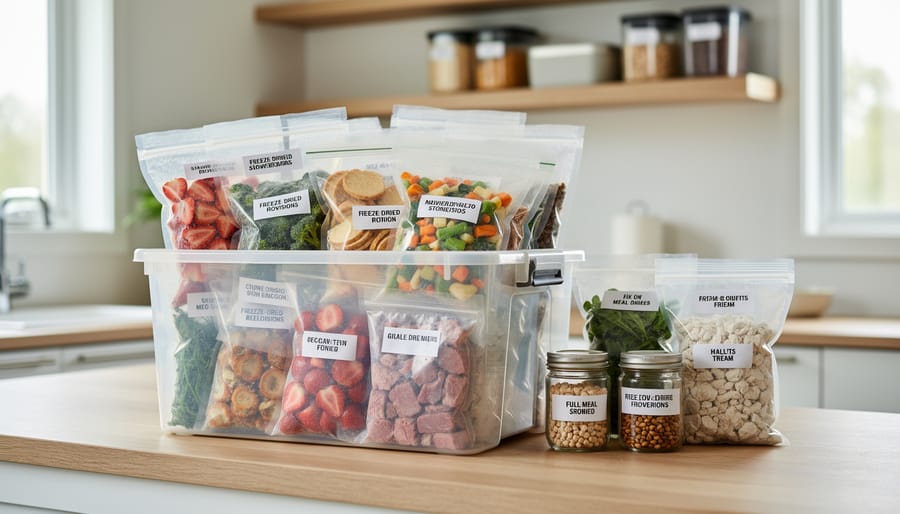
- Transfer the freeze-dried food immediately into mylar bags or mason jars with oxygen absorbers, sealing within 15 minutes to prevent moisture reabsorption from the air.
Label everything with the contents and date. Trust me on this, freeze-dried chicken and freeze-dried apple look surprisingly similar after six months in storage, and you don’t want that surprise during a midnight watch.
Your first batch teaches you the machine’s quirks and timing. Some foods finish early, others need the full cycle plus extra time. Keep notes on what worked and what didn’t, and you’ll dial in your process quickly. Most sailors find their rhythm within three or four batches.
Packaging and Storing Your D-I-Y Freeze-Dried Provisions
Proper packaging determines whether your D-I-Y freeze dry efforts succeed or fail at sea. Moisture is the enemy, even trace amounts will ruin months of shelf life and compromise food safety.
**Mylar Bags: Your First Line of Defense**
Metallized mylar bags with oxygen absorbers offer the gold standard for storing freeze-dried provisions. Choose 5-mil or thicker bags for durability in marine environments. Place a 300cc oxygen absorber inside each bag before heat-sealing the top with a household iron or dedicated impulse sealer. The oxygen absorber creates an oxygen-free environment that prevents oxidation and blocks bacterial growth. Work quickly once you open the absorber pack, they activate on contact with air.
**Vacuum Sealing Considerations**
While vacuum sealing works for short-term storage (three to six months), it compresses delicate freeze-dried foods and can’t match mylar’s moisture barrier. If you vacuum seal, double-bag fragile items like freeze-dried candy or berries to prevent crushing.
**Labeling That Actually Helps**
Mark each package with the contents, freeze-dry date, and rehydration instructions. Include water ratios and soak times so you’re not guessing in rough seas at 0200. Use permanent marker or waterproof labels, standard inkjet labels smudge in damp lockers.
**Storage Conditions**
At home, keep packaged provisions in a cool, dark, dry space. Basement storage beats garage storage every time. Properly packaged freeze-dried food lasts 20-25 years at 50-60°F.
On board, store packages in the driest locker available, away from the bilge. Even sealed provisions benefit from being kept cool. In tropical conditions, shelf life drops to 10-15 years, still exceptional for provisioning. Check packages monthly for any puffing or moisture accumulation, which signals seal failure.
Rehydrating on Board: Tips for the Galley
Rehydrating freeze-dried provisions in the galley requires a different approach than cooking with fresh ingredients. Most freeze-dried meals need a 1:1 ratio of food to water, though denser items like meats might need slightly more. Hot water cuts rehydration time to 5-10 minutes, while cold water works fine if you have 15-20 minutes to spare, handy when you’re busy trying to optimize performance during a race.
For fruits and vegetables, start with less water than you think. You can always add more, but you can’t remove it. Freeze-dried strawberries take about 5 minutes in cold water, while denser veggies like carrots need 10 minutes in hot water.
Here’s a galley trick: add freeze-dried vegetables directly to soups or stews during cooking. They’ll rehydrate as the pot simmers, adding nutrition without extra steps. Freeze-dried eggs work great scrambled, just whisk with water until smooth before cooking. For freeze-dried candy, no rehydration needed. The crunchy texture makes a perfect energy boost straight from the package.
Keep a spray bottle of water handy for freeze-dried herbs and smaller portions. A few spritzes rehydrate garnishes or single-serving vegetables without wasting water. Pre-measure water portions before you start cooking, especially in rough conditions when precise measuring gets tricky.
Cost Analysis: D-I-Y vs. Commercial Freeze-Dried Options
Let’s get real about the numbers. A home freeze dryer runs between $2,200 and $3,500 depending on size. Add in vacuum pump oil, mylar bags, and oxygen absorbers, and you’re looking at another $150-$200 in startup supplies. Electricity costs vary by model and cycle length, but expect around $1.50-$3.00 per batch for a typical 24-hour run.
Commercial freeze-dried meals cost $8-$15 per serving. A family-sized home freeze dryer processes 7-10 pounds of fresh food per batch, yielding roughly 12-16 servings once rehydrated. Your actual food cost depends on what you freeze dry, but let’s use $25 worth of groceries per batch as a realistic average. Including electricity and packaging, each D-I-Y batch runs about $30, or roughly $2 per serving.
| Timeframe | D-I-Y Total Cost | Commercial Total Cost | Savings |
|---|---|---|---|
| Year 1 (24 batches) | $3,220 | $2,880 | -$340 |
| Year 2 (48 batches) | $3,940 | $5,760 | $1,820 |
| Year 5 (120 batches) | $6,500 | $14,400 | $7,900 |
For sailors who provision two multi-day trips per month, you hit break-even around 18 months. After that, the savings compound quickly. Factor in the ability to freeze dry high-value items like proteins and freeze-dried candy at a fraction of retail prices, and the numbers tilt even more favorably. Weekend sailors provisioning less frequently might need three to four years to break even, making this investment best suited for those who cruise regularly or prepare for extended passages.
Taking control of your sailing provisions through D-I-Y freeze drying offers rewards that extend well beyond lighter bags and longer shelf life. You gain the freedom to customize every meal to your crew’s preferences, the confidence of knowing exactly what you’re eating offshore, and real cost savings after your initial investment pays off. Whether you’re preparing for a weekend cruise across Lake Ontario or stocking up for a month-long passage, freeze drying puts you in command of one of sailing’s most critical elements.
The learning curve is gentler than you might expect. Your first batches teach you volumes about moisture content, rehydration times, and which foods deliver the best results. Each successful batch builds your skills alongside your provisioning stores.
This skill fits naturally with other sailing efficiency tips that transform how you approach time on the water. You’re not just preserving food, you’re embracing a more self-reliant approach to sailing that our community values. The galley becomes another space where your preparation and expertise matter, turning provisioning from a chore into an integral part of the adventure itself.