
Can you vape on a sailboat in Canada? Generally, yes, if you’re of legal age and the skipper allows it. Vaping products are legal to buy and use under federal law, but navy vaping policy is a different story. Military vessels treat vaping as a managed activity: restricted to designated areas, kept clear of fuel, ammunition and enclosed spaces, and subject to the commanding officer’s rules. The logic is simple. Confined quarters, shared air and flammable materials call for strict control.
That same thinking applies on your recreational boat, just on a friendlier scale. Federally, the minimum age to buy vaping products is 18, and nicotine concentration is capped at 20 mg/mL for products sold in Canada. Provinces set their own age limits, flavour rules and where vaping is banned, so check Ontario’s requirements before you cast off.
Below, you’ll find a quick-reference table of the verified federal basics, plus practical advice on onboard etiquette, fire and fuel safety, and keeping your gear dry and corrosion-free. Think of it as crew courtesy: a few simple habits keep everyone relaxed on the water.
What ‘Navy Vaping Policy’ Means and Why Sailors Pay Attention

On naval and military vessels, vaping is rarely a free-for-all. It’s treated as a managed activity, and the reasons are easy to feel once you’ve spent a night in a small cabin. Confined spaces mean vapour lingers and travels through shared air. Fire risk is a constant concern, since lithium batteries, fuel and tight quarters don’t mix casually. And crew health matters on any long passage, where everyone breathes the same air for days. So big fleets tend to answer with structure: designated areas, clear expectations and a chain of responsibility for keeping things safe.
You don’t need to chase down the exact wording of any one navy’s rulebook to learn from it. Policies differ between fleets and change over time, so the letter of them isn’t much use to a recreational sailor anyway. The thinking behind them travels well, though. Pick a spot where vaping makes sense. Show your shipmates the same courtesy you’d want. Put safety ahead of convenience, every time.
That’s the same mindset that makes a boat run well in general. Before a weekend out of Kingston, you sort your gear, check your rigging and finish your provision prep so nothing surprises you offshore. Agreeing on how vaping fits aboard is just one more item on that checklist, and it keeps the cockpit a relaxed place for everyone.
Canadian Vaping Rules Every Skipper Should Know
Before you set rules aboard, it helps to know where the law stands, because a skipper who understands the basics can explain them clearly to guests. Under Canada’s federal framework, the Tobacco and Vaping Products Act is the starting point, and the Act current and amended dates show it is current to 2026-10-29, last amended on 2024-06-20.
Here’s a quick reference of what matters most for those of us out on the water:
| Rule or Requirement | What It Means for Sailors |
|---|---|
| Federal minimum age of 18 | It is illegal to sell vaping products to anyone under 18, so keep that in mind with youth crew and guests. |
| 20 mg/mL nicotine cap | Vaping products made or imported for sale in Canada can’t exceed this concentration. |
| Legal status | E-cigarettes are allowed under a legal framework and are legal to sell, use and purchase, including online. |
| Provincial authority | Provinces set the actual age, flavour rules and where vaping is banned. |
The nicotine ceiling comes from the Nicotine Concentration in Vaping Products Regulations, and Health Canada explains the Maximum 20 mg/mL nicotine requirement for products sold in the country. On the broader picture, this overview of the Legal framework for e-cigarettes in Canada confirms that selling, using and buying them, even online, sits within a regulated system.
The key takeaway for skippers is that the federal rules only set the baseline. The provinces decide the actual age, the flavour rules and where vaping is prohibited, so what applies on a dock or in a marina can differ from what you’d expect elsewhere. Since we sail out of Ontario, take a few minutes to check the province’s current rules before you finalize your onboard policy, and do the same if your cruising plans take you into another province’s waters.
Setting Vape Rules for Your Own Boat and Crew
Cockpit, Cabin and Downwind: Choosing Where Vaping Fits
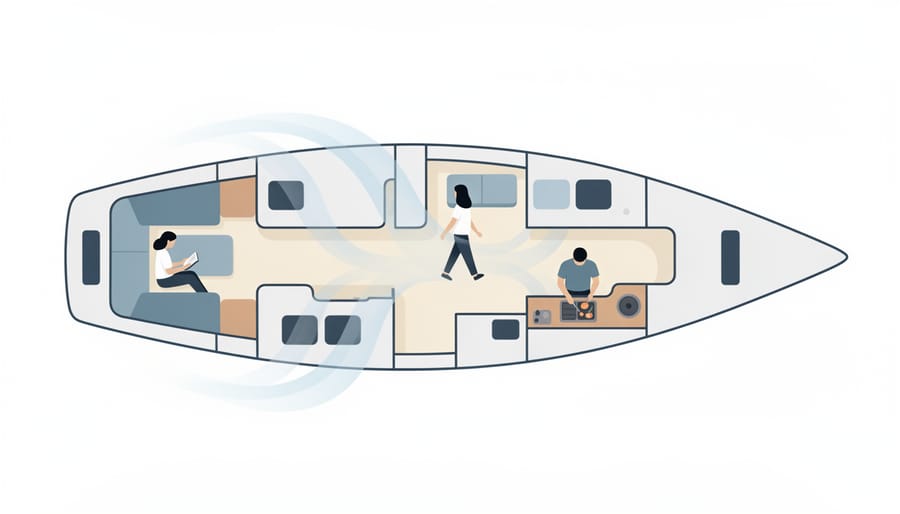
A small cabin holds vapour far longer than an open cockpit does. Between the berths, the galley and the nav station, every cushion, sail bag and bit of bedding is within arm’s reach, and a hatch only moves so much air. That is why courtesy matters most below deck, and why many skippers simply keep the cabin vape-free so nobody has to ask.
The cockpit is the natural home for vaping aboard, as long as you read the wind. Stand or sit so the breeze carries vapour away from the crew, not across the helm or through the open companionway into the galley. Sails count too. A downwind drift can wrap vapour around a trimmer or send it straight into the dodger, so move to the leeward side when you’re sharing space.
At anchor, a quiet evening can make a stray cloud feel bigger than it is, so check where your guests are sitting before you start. A quick “mind if I vape on the stern?” costs nothing and keeps the mood easy. If you’re picking gear for those calm evenings, our relaxation vapes guide can help you choose something compact and low-fuss.
Guests, Youth Crew and Club Etiquette
Canadian law sets the federal minimum age at 18, and it’s illegal to sell vaping products to anyone under that. But the provinces set the actual age, the flavour rules and where vaping is banned, so check Ontario’s current rules before you set anything in stone for your crew.
That matters most when you take youth crew or guests aboard. If a junior sailor or a friend’s teenager joins you for an evening sail, the safest approach is simple: no vaping device on board for anyone under the legal age, and no sharing, ever. Say it plainly before you leave the dock. Nobody takes offence when the rule is clear and friendly.
Your boat isn’t the only set of rules in play. Sailing schools, clubs and marinas often set their own policies, and these can be stricter than the law. Some clubs keep docks, clubhouses and youth programs vape-free, while others point users to a designated spot. Look for posted signs or ask the dockmaster.
When in doubt, follow the dock and club rules. It keeps the harbour welcoming for everyone, from first-time guests to racing regulars, and it’s the same courtesy we’d hope to find at any other marina.
Safety and Gear Care Around Vapes on a Sailboat
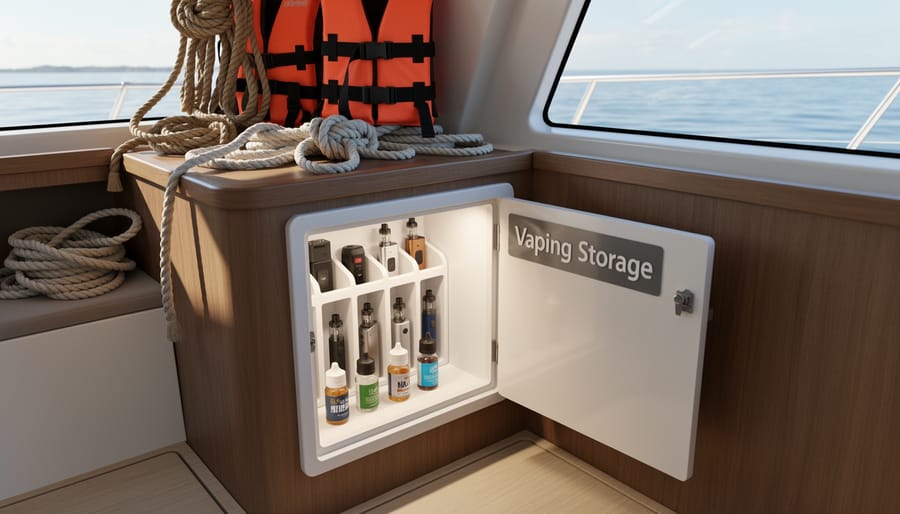
A sailboat packs a lot into a small space: batteries, wiring, fuel, propane and salt air. That mix is why vape gear deserves the same care as the rest of your onboard equipment.
Start with charging. Use the charger that came with your device, and don’t leave a device charging unattended or overnight in a locker or berth. Charge in a spot where you can see it, away from bedding, loose paper and anything that could shift while heeled. If a battery gets hot, swells or smells odd, stop using it. Go easy on the boat’s own electrical system too, and don’t daisy-chain adapters on a circuit that’s already carrying navigation lights, a bilge pump and a fridge.
Storage matters just as much. Heat and spray are the enemies. A device left on a sunny cockpit seat or dashboard can cook in the afternoon, and e-liquid kept in a hot locker degrades and can leak. Keep both in a cool, dry, secure spot, ideally a small waterproof case or dry bag, so a wave over the rail or a sudden squall doesn’t ruin them. Keep e-liquid out of reach of kids and pets, and wipe down any leaks promptly.
Finally, keep vaping well clear of fuel, propane and engine bays. When you’re doing engine work, topping up the tank or changing a propane bottle, put the device away entirely. A calm anchorage is the right place for a break, not the engine compartment.
Treat all of this as part of regular boat maintenance. If you’re unsure about your wiring or charging setup, that’s a good time to have the electrical system looked over.
Common Questions From the Dock
Here are quick answers to the questions that come up most often at the dock and around the club barbecue.
Is vaping legal in Canada?
Yes, e-cigarettes are allowed under a legal framework, and they’re legal to sell, use and purchase, including online. Provinces then add their own rules on top.
What is the minimum age?
The federal minimum age is 18, and it’s illegal to sell vaping products to anyone younger. Provinces set the actual age, so check current Ontario rules before you hand anything to youth crew.
Is there a nicotine limit?
Yes. Vaping products made or imported for sale in Canada are capped at 20 mg/mL under the Nicotine Concentration in Vaping Products Regulations.
Who decides where vaping is banned?
Provinces set flavour rules and where vaping is banned, so look up Ontario’s current rules, plus any policy your marina or club has posted. Anyone with health questions should talk to a health professional.
Planning a trip beyond your home port? Read up on flying with vapes before you pack for a regatta or a delivery crew job, since travel rules differ from boat and dock rules.
At the end of the day, vaping aboard comes down to three things: know the law, agree on crew rules before you cast off, and keep safety and shared enjoyment at the front. A quiet evening at anchor works best when everyone aboard feels comfortable, the cockpit stays breezy, and the gear stays dry and away from anything flammable.
Borrow the spirit of a naval policy, not the fine print. Clear expectations, designated spots and a bit of courtesy go a long way on any boat, big or small.
We’d love to hear how you handle it. Share your own onboard etiquette tips with the Canada Sailing Community, whether it’s how you treat guests, where you draw the line below deck, or how you keep the galley fresh. And if your boat needs attention before the season, reach out from Kingston about maintenance, rigging and custom modifications. Start with our mast tuning tips and we’ll take it from there.