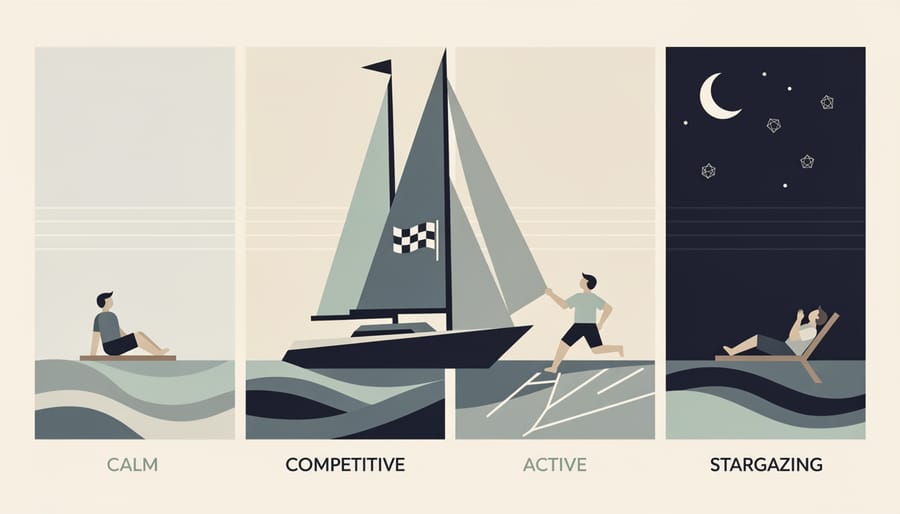
The best yachting adventures combine sailing with purposeful activities that transform time on the water into unforgettable experiences. For Ontario sailors in 2026, seven proven adventure types stand out: multi-day island-hopping expeditions, competitive race weekends with post-race gatherings, sunrise and sunset sailing sessions, fishing-focused sailing trips, water sports training days, educational sailing expeditions, and overnight anchorage with stargazing. Each adventure type builds on core sailing skills while adding layers of recreation, competition, or discovery that make every outing distinctive.
The beauty of these adventures lies in their accessibility. You don’t need exotic destinations or sailboat upgrades to start. Whether you’re a leisure sailor looking to break from your usual weekend routine or a competitive racer seeking fresh challenges between regattas, these activities work with the boats and skills you already have. What changes is your approach to planning and the specific goals you set for each outing.
Ontario’s vast network of lakes and waterways provides ideal conditions for all seven adventure types. The key is matching the right adventure to your interests, crew availability, and seasonal timing. Some activities, like educational expeditions and fishing trips, thrive in spring and fall when anchorages are quieter. Others, particularly island-hopping and water sports days, peak during summer when extended daylight and warm temperatures maximize enjoyment.
How We Selected These Yachting Adventures
We chose these seven yachting adventures based on what works for sailors on the Great Lakes, particularly around Kingston and the Thousand Islands region. Each selection balances challenge with enjoyment, offering something tangible that improves your time on the water rather than demanding exotic destinations or specialized vessels.
Our criteria focused on practicality and versatility:
- Accessible within Ontario waters without extensive travel or special permits
- Suitable for a range of skill levels, from weekend cruisers to competitive racers
- Achievable with standard sailboat equipment and minimal modifications
- Balanced between active sailing engagement and opportunities for relaxation
- Repeatable throughout the season with different outcomes each time
Community feedback from local sailors shaped these picks. We listened to what Kingston yacht club members and Great Lakes cruisers actually do, not what glossy magazines suggest. Every adventure here has been tested by real sailors dealing with real conditions, changeable weather, typical cruising budgets, and the desire to make each outing count.
1. Multi-Day Island-Hopping Expeditions
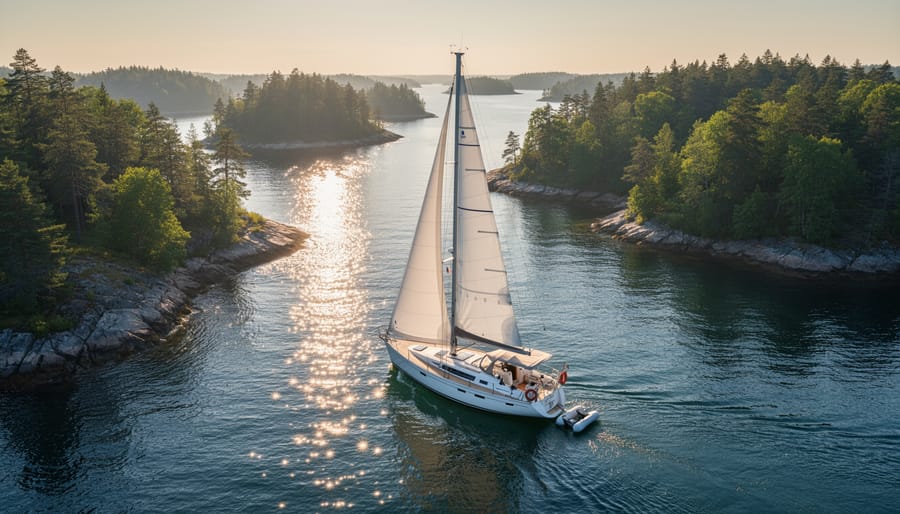
Island-hopping transforms your sailboat into a self-contained exploration vessel, letting you wake up to a different shoreline each morning. This adventure style rewards careful planning with genuine freedom, no reservations, no checkout times, just you and a chain of anchorages stretching across Ontario’s waterways.
The Thousand Islands region offers the most accessible introduction. Plot a loose route connecting five or six islands over three to four days, spacing them 10 to 15 nautical miles apart. Build in flexibility: if you find an anchorage you love or weather shifts, you can easily adjust. The North Channel delivers a wilder experience with its dramatic granite shores and protected bays, though it demands stronger navigation skills and more self-sufficiency since marine services thin out considerably once you’re beyond Killarney.
Provisions make or break multi-day trips. Stock more fresh water than you think necessary, figure three gallons per person daily for drinking, cooking, and basic cleanup. Freeze-dried provisions eliminate cooler space struggles and last indefinitely, while a simple single-burner stove handles hot meals without taxing your electrical system. Pack food that doesn’t require refrigeration after day two.
Creating your floating basecamp means thinking beyond sailing gear. Bring a decent anchor light, extra line for stern tying in narrow coves, and a reliable dinghy if your boat carries one, it’s your shoreline shuttle. A portable speaker, camp chairs that clip to the rail, and a waterproof book transform your cockpit into a proper evening hangout space. The real payoff hits when you’re anchored off a deserted island, swimming off the stern as the sun drops, already planning tomorrow’s destination over a simple meal.
2. Competitive Race Weekends with Post-Race Gatherings
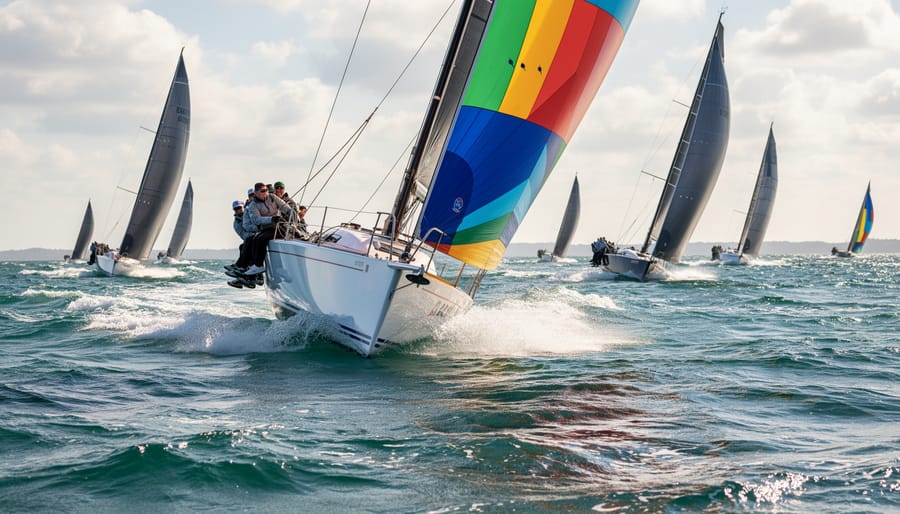
Organized regattas transform weekend sailing into layered experiences that blend competitive intensity with deep community bonds. The Ontario racing circuit, from Kingston Yacht Club’s Wednesday night series to the larger Port Credit events, offers regular opportunities to test your skills against other sailors while building lasting friendships with people who share your passion.
Pre-race preparation separates casual participants from serious competitors. Beyond the obvious checklist of safety equipment and crew briefings, successful race preparation involves fine-tuning your yacht’s performance systems. A properly tuned mast can mean the difference between mid-pack finishes and podium positions, particularly in the light air conditions common on Lake Ontario during summer months. Study the race instructions carefully, walk through the course mentally with your crew, and establish clear communication protocols before the starting gun fires.
During the race itself, maintain awareness of both tactical opportunities and the bigger picture, yes, you’re competing, but you’re also practicing boat handling skills that translate to all your sailing adventures. That close tack near the windward mark teaches precision. Reading wind shifts sharpens your weather awareness for future cruising trips.
The post-race gathering is where racing truly distinguishes itself from solitary sailing. Dock parties, clubhouse debriefs, and informal gatherings over cold drinks create spaces where competitive tensions dissolve into shared learning. Veterans explain their tactical decisions. Rookies ask questions without judgment. These conversations build the collective knowledge that strengthens our entire sailing community, turning individual races into building blocks for long-term friendships and improved seamanship across the fleet.
3. Sunrise and Sunset Sailing Sessions
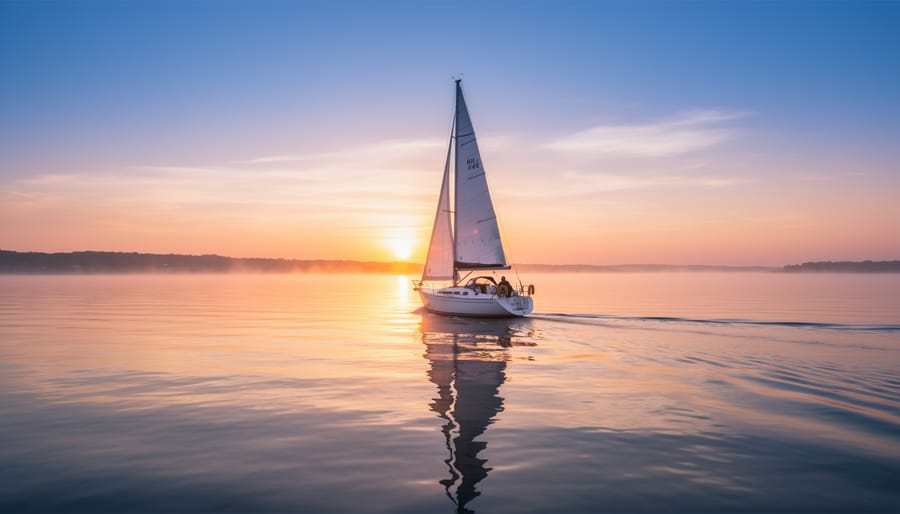
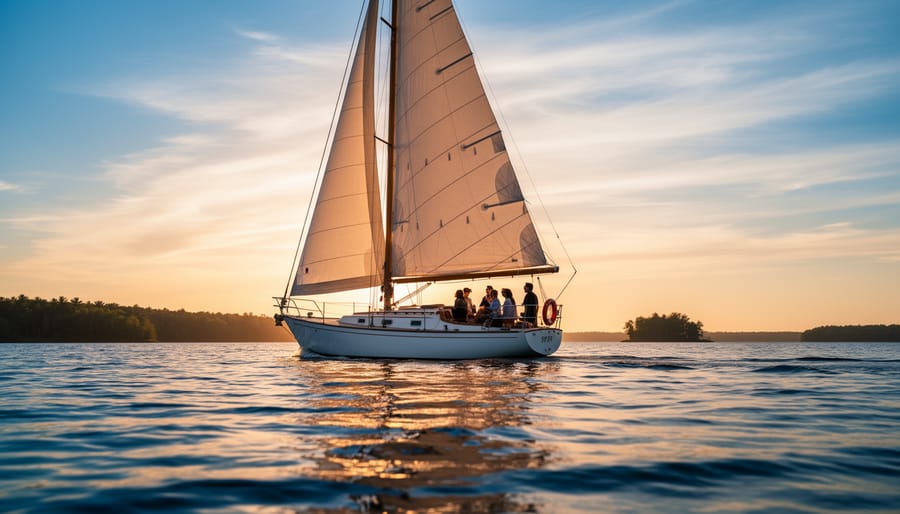
There’s something transformative about casting off in the pre-dawn darkness and watching the sky shift from indigo to gold as your sails fill. Golden hour sailing, whether at sunrise or sunset, offers a completely different experience from midday outings, combining optimal conditions with visual drama that turns routine trips into moments you’ll replay for months.
The practical advantages match the aesthetic ones. Early morning waters are typically glassier, with thermal winds yet to build and weekend boat traffic still docked. You’ll find more consistent, predictable breezes and cooler temperatures during summer months. Sunset sessions often catch the evening thermals as land cools faster than water, creating smooth, steady wind that’s perfect for practicing sail trim or simply enjoying an effortless reach.
Timing requires more precision than daytime sailing. Arrive at your marina forty-five minutes before sunrise to prep your boat in sufficient light, and plan to return before full darkness unless you’re confident with navigation lights and local hazards. Check weather specifically for dawn or dusk conditions, radiation fog can form quickly in early morning, particularly in spring and fall.
Safety considerations centre on visibility. Ensure your running lights function properly and carry a spotlight for marking your position to any commercial traffic. Keep a headlamp accessible for line handling and cockpit tasks. Evening sessions benefit from planning your return route while you still have good light, identifying landmarks and hazards before the sun drops.
The reward is sailing that feels private and profound, even on familiar waters.
4. Fishing-Focused Sailing Trips
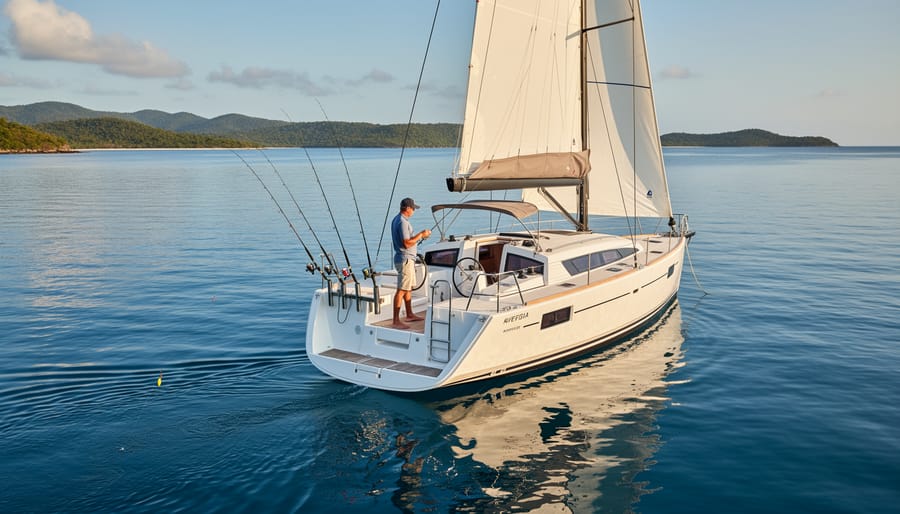
Fishing from a sailboat transforms an ordinary day on the water into a productive adventure, letting you cover more ground than shore-based anglers while enjoying the rhythms of sailing. The key is preparation, before you leave the dock, decide whether you’ll troll while under sail or anchor in prime locations, because each approach demands different rigging.
For trolling, rig lines from stern cleats or dedicated rod holders, keeping them clear of sheets and running rigging. Downriggers work well on larger cruising boats, while hand lines or simple rod setups suit smaller yachts. In the Great Lakes and Thousand Islands, target walleye, bass, and northern pike near shoals, drop-offs, and weed beds that show up on your chart plotter. Trolling at 2-3 knots under reduced sail gives fish time to strike without overpowering your tackle.
Anchored fishing offers a more relaxed pace. Drop the hook in 15-25 feet near structure, let out adequate scope, and fish the current or wind drift. This method works beautifully from recreational catamarans with their stable platforms and dual hulls that won’t spook fish as much as a rolling monohull. Bring a cooler for your catch, a net with an extendable handle, and needle-nose pliers for hook removal.
The beauty of fishing-focused sailing trips lies in their flexibility, if the bite slows, you simply raise anchor and sail to the next promising spot, turning every outing into an exploration that blends two classic waterborne pursuits into one memorable day.
5. Water Sports Training Days
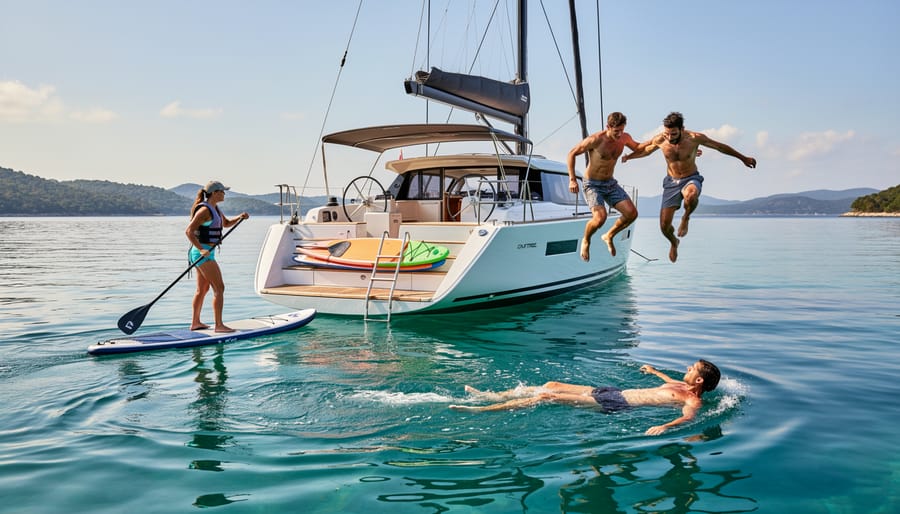
Your sailboat transforms into a versatile recreation hub when you dedicate a day to water sports training. Rather than rushing between destinations, you anchor in a protected bay and use your yacht as a stable base for paddleboarding, swimming instruction, or practicing dinghy handling skills your crew has wanted to develop.
The logistics require forethought. Choose an anchorage with at least 50 feet of clear water around your swing radius, enough space for paddleboarders to maneuver without drifting into other boats. Deploy a swim ladder on the transom and rig a stern line with floats marking your boat’s perimeter, creating a visible safety zone. If you’re launching inflatable paddleboards or a small dinghy, secure the pump and paddles before raising anchor so everything’s accessible when you arrive.
Timing matters as much as location. Early afternoons in July and August offer warm water and predictable light winds, ideal for beginners trying standup paddleboarding or kids learning basic sailing in a small boat alongside yours. One crew member should always remain aboard as safety officer, watching for approaching traffic or sudden weather shifts while others are in the water.
The beauty of this adventure lies in skill cross-pollination. Crew members who excel at advanced sail trim might discover balance challenges on a paddleboard, while competitive racers often find that teaching dinghy basics to newcomers sharpens their own understanding of wind patterns and boat handling. Pack a waterproof speaker, prepare a hearty lunch, and you’ve created an adventure that builds crew confidence while everyone stays refreshingly cool.
6. Educational Sailing Expeditions
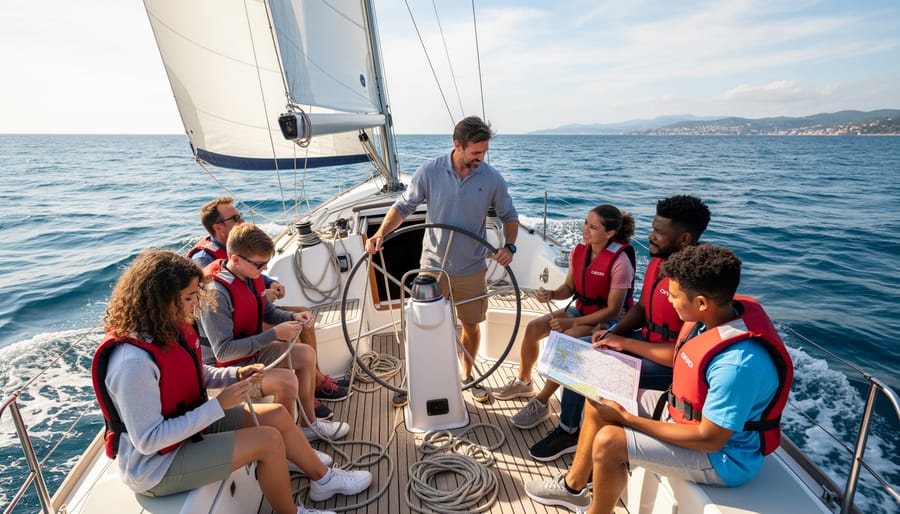
Educational sailing trips turn every passage into a classroom without walls. Instead of simply reaching a destination, you’re mastering skills that elevate your confidence and capability on the water. These adventures work because they combine hands-on practice with real conditions, making abstract concepts tangible when you’re actually trimming sails in shifting winds or identifying stars above a quiet anchorage.
Start by choosing a focused learning objective for each trip. Celestial navigation becomes far more engaging when you plan a weekend specifically to practice sun sights and star fixes, rather than treating it as an afterthought during a regular cruise. Advanced sail trim techniques reveal themselves clearly when you dedicate an afternoon to experimenting with telltales, backstay tension, and outhaul adjustments in varying wind strengths.
Heavy weather preparation deserves its own expedition. Pick a day with forecast winds in the 20-25 knot range (nothing extreme) and practice reefing under sail, deploying storm sails, and managing boat balance in challenging conditions. The controlled exposure builds skills that lectures alone can’t provide.
Marine ecology trips transform familiar waters into discovery zones. Bring field guides to identify fish species, water birds, and coastal plants. Understanding the ecosystem you sail through deepens your connection to these waters beyond just navigation waypoints.
The key is structuring time for both focused skill practice and relaxed sailing. Schedule learning blocks in the morning when minds are fresh, then let afternoon hours flow naturally. Document what you’ve learned in a ship’s log, creating a reference you’ll actually use long after the trip ends.
7. Overnight Anchorage and Stargazing Experiences
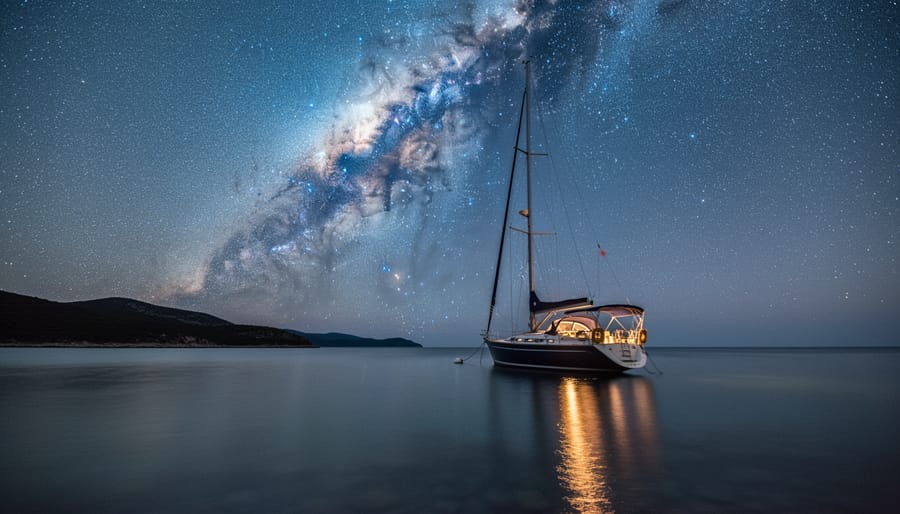
Spending a night at anchor transforms sailing from an afternoon activity into a complete immersion in the marine environment. When you wake to morning mist lifting off glassy water, you realize overnight anchorage offers something no day sail can replicate.
The key starts with choosing your location carefully. Look for protected bays with good holding ground, mud or sand rather than rock, and check your chart for depth at low tide. In Ontario’s waters, spots like Waupoos Island in the Bay of Quinte or sheltered coves in Georgian Bay’s North Channel offer reliable protection. Set your anchor with at least a 5:1 scope ratio, and after backing down to set it, take bearings on two fixed points ashore so you can check for dragging during the night.
Preparing your boat for overnight comfort means thinking through basics: fresh water supply, proper ventilation without letting bugs in, bedding that works in marine humidity, and a cooler stocked for breakfast. Install an anchor light and keep a flashlight within reach. Many sailors underestimate how much the boat moves at anchor, secure anything that might slide or rattle.
The real payoff comes after dark. Away from shore pollution, the Milky Way stretches across the sky with startling clarity. Download a stargazing app beforehand to identify constellations, planets, and satellites. Early morning brings wildlife encounters, herons fishing in the shallows, otters playing near your hull, or the haunting call of loons echoing across the water.
Bring binoculars for both stargazing and dawn wildlife watching. The silence, broken only by water lapping against the hull, creates a meditative experience that reminds you why you sail in the first place.
Common Questions About Yachting Adventures
When sailors first explore these enhanced yachting experiences, several practical questions come up repeatedly. Here are the answers that matter most.
What equipment modifications make yachting adventures more comfortable?
Start with basics that enhance multiple experiences: a quality anchor setup with sufficient rode, a cockpit cushion or two for extended cruising, and proper lighting for evening activities. For fishing trips, add rod holders and a cooler. Most adventures don’t require major modifications, your existing boat is already capable.
How do you balance sailing skill development with relaxation?
Structure your trips with intention. Dedicate morning hours to focused sailing techniques, practicing tacks, sail trim, or navigation, then shift to a leisurely afternoon at anchor or an easy downwind leg. Educational expeditions naturally blend both, as learning itself becomes the relaxing escape from daily life.
What’s the best adventure for beginners versus experienced sailors?
Beginners should start with sunrise sessions or water sports days in familiar waters, building confidence before moving to multi-day island-hopping. Experienced sailors can tackle overnight anchorages or educational expeditions that push navigation skills. Competitive race weekends work for both, with different fleet divisions accommodating varied experience levels.
How do weather conditions affect adventure planning?
Weather dictates everything. Fishing trips and island-hopping require stable conditions with predictable winds under 15 knots. Stargazing needs clear skies and calm anchorages. Race weekends proceed in most conditions, but sunrise sessions are best in light, steady breezes. Always have a backup plan and monitor forecasts closely, especially for overnight trips.
The beauty of these adventures lies in their flexibility. You can adapt each experience to your comfort level, boat capabilities, and the specific conditions Lake Ontario or the St. Lawrence present on any given day.
Making Your Next Sailing Trip an Adventure
The difference between routine sailing and a genuine yachting adventure often comes down to intention. Your next trip on Lake Ontario doesn’t require exotic destinations or expensive equipment, it needs a mindset shift toward enhancement and exploration. Whether you’re adding a fishing rod to your weekend sail, planning an overnight anchorage under dark skies, or simply setting your alarm for a sunrise departure, each deliberate choice transforms ordinary time on the water into something memorable.
The Ontario sailing community thrives on shared experiences. What works brilliantly for one crew might inspire another, and the collective wisdom from Kingston to Georgian Bay creates a rich resource for everyone looking to enhance their time afloat. Don’t wait for the perfect conditions or the ideal weekend. Choose one adventure from this list, adapt it to your boat and skill level, and discover what happens when you stop following the same routine and start treating each sail as an opportunity for something new.